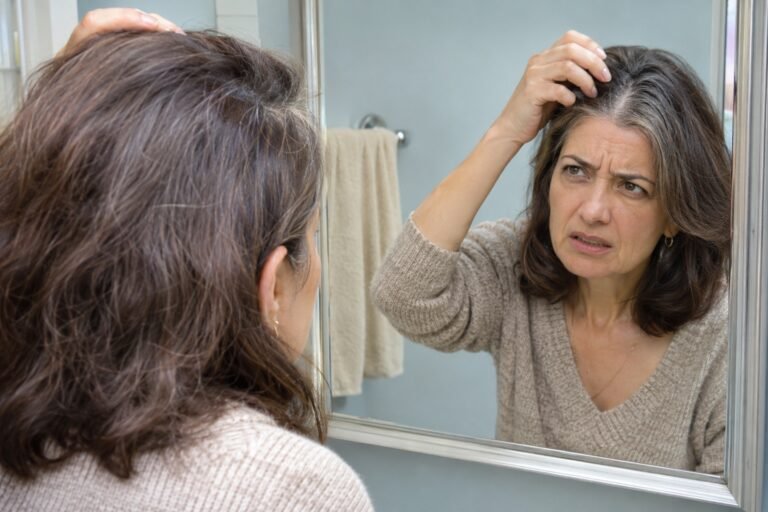



It has been more than a year since your last period. Perhaps the hot flashes are easing, or perhaps they still interrupt your day. You might wonder whether the end of your periods means your hormones have switched off.
In this article
Your body still uses hormone signals throughout life. Menopause changes ovarian hormone production and the monthly reproductive cycle, while other systems stay active. Knowing the difference can help you describe symptoms and ask about care for the years ahead.
What “after menopause” means
The Office on Women’s Health (OWH) describes menopause as reaching 12 months without a period. The years after that milestone are called postmenopause. If medicines or surgery affect your bleeding pattern, ask your clinician how your stage is assessed. Our perimenopause and menopause guide explains the terms.
What changes in ovarian hormones and FSH
After menopause, the ovaries release no more eggs and make very little estrogen and progesterone. The monthly ovulation-related pattern is no longer continuing as it did before.
MedlinePlus explains that FSH, the pituitary signal involved in ovarian activity, generally rises as the ovaries become less responsive. A higher FSH can be an expected part of this life-stage pattern. It is not a complete report on your health or an explanation for every symptom.
You do not need to monitor a hormone score to understand the transition. Testing depends on the clinical question; our FSH guide and perimenopause testing guide provide context.
Estrogen and other hormone signals remain
Estrogen does not disappear completely. MedlinePlus describes estrone (E1) as an estrogen that continues after menopause. It is different from estradiol, the main ovarian estrogen during the reproductive years.
The Endotext chapter on adrenal androgens and aging explains that adrenal precursors such as DHEA can be converted into sex steroids in other tissues. These pathways are part of ongoing biology; they do not recreate the old monthly ovarian cycle.
Adrenal hormone production also changes with age. DHEA-related levels tend to decline gradually with aging, which is not the same process as menopause. “Still active” therefore does not mean “unchanged.” These age-related findings are not a reason to start a hormone or DHEA supplement on your own.
The NIDDK’s endocrine overview places the ovaries within a wider system that includes the pituitary, adrenal glands, thyroid, and pancreas. Thyroid signals, insulin, and adrenal hormones continue to matter after periods stop. See our adrenal gland guide for background.
What this means for everyday health
OWH notes that symptoms do not all follow the same course. Hot flashes and night sweats can last for years, while genital and urinary symptoms may persist or worsen without treatment. You can ask for help even if your last period was a long time ago.
Its menopause and health overview also highlights faster bone loss and rising heart disease risk after menopause, alongside bladder symptoms and repeat urinary tract infections linked with lower estrogen. This is a reason for a focused care conversation, rather than assuming every new problem is inevitable.
For example, someone may want help with night sweats now and have separate questions about bone health at a checkup. Those concerns can be considered together without reducing them to one hormone number. Our bone health guide offers more detail.
What you can do
- Describe the impact. Tell your clinician what affects sleep, work, comfort, or relationships, and when it began.
- Ask about prevention in context. Review heart risk factors and whether your age and history make a bone density assessment appropriate.
- Keep manageable health habits. OWH encourages physical activity, avoiding smoking, and calcium-containing foods. Ask about adjustments that fit your health and circumstances.
- Discuss symptom options. Hormonal and nonhormonal approaches need an individual discussion. OWH says hormone therapy is not recommended to prevent heart disease or stroke; a general hormone change does not establish a treatment choice.
- Bring new symptoms into the conversation. Persistent tiredness or unexplained weight changes deserve assessment. Our fatigue guide and thyroid test guide explain other questions that may arise.
When to talk to a doctor
Any vaginal bleeding after menopause needs prompt medical assessment. OWH advises seeing your provider right away. That includes spotting or bleeding that happens only once; do not assume it is a period returning.
Also ask for help with hot flashes that disrupt life, ongoing sleep problems, genital or urinary discomfort, repeated urinary infections, or other persistent new symptoms. Tell your clinician about medicines and supplements, including hormone products you use.
Frequently asked questions
Do you still have hormones after menopause?
Yes. Ovarian hormone production changes substantially, but estrogen pathways and other endocrine systems remain active.
Is high FSH expected after menopause?
It commonly fits the menopause pattern, but interpretation depends on the reason for testing and your health context. A single number does not explain all symptoms.
Should hot flashes have stopped by now?
They can continue for years. If they are affecting your life, discuss them rather than waiting for a fixed deadline.
Can bleeding after menopause be a normal period?
Do not treat it as a period restarting. Contact your provider promptly so the cause can be assessed.