



Maybe your doctor checked your FSH because your periods have changed. Or you’re trying to get pregnant. Or you bought a home menopause test at the pharmacy. Either way, you’re now looking at a number and wondering what it means.
FSH stands for follicle-stimulating hormone. It’s a messenger from your brain’s pituitary gland that helps run your reproductive system. A blood test measures that message. It doesn’t directly measure your fertility, your egg quality, or whether your hormones are “balanced.” To understand the result, start with why it was tested and what else is going on.
What does FSH do?
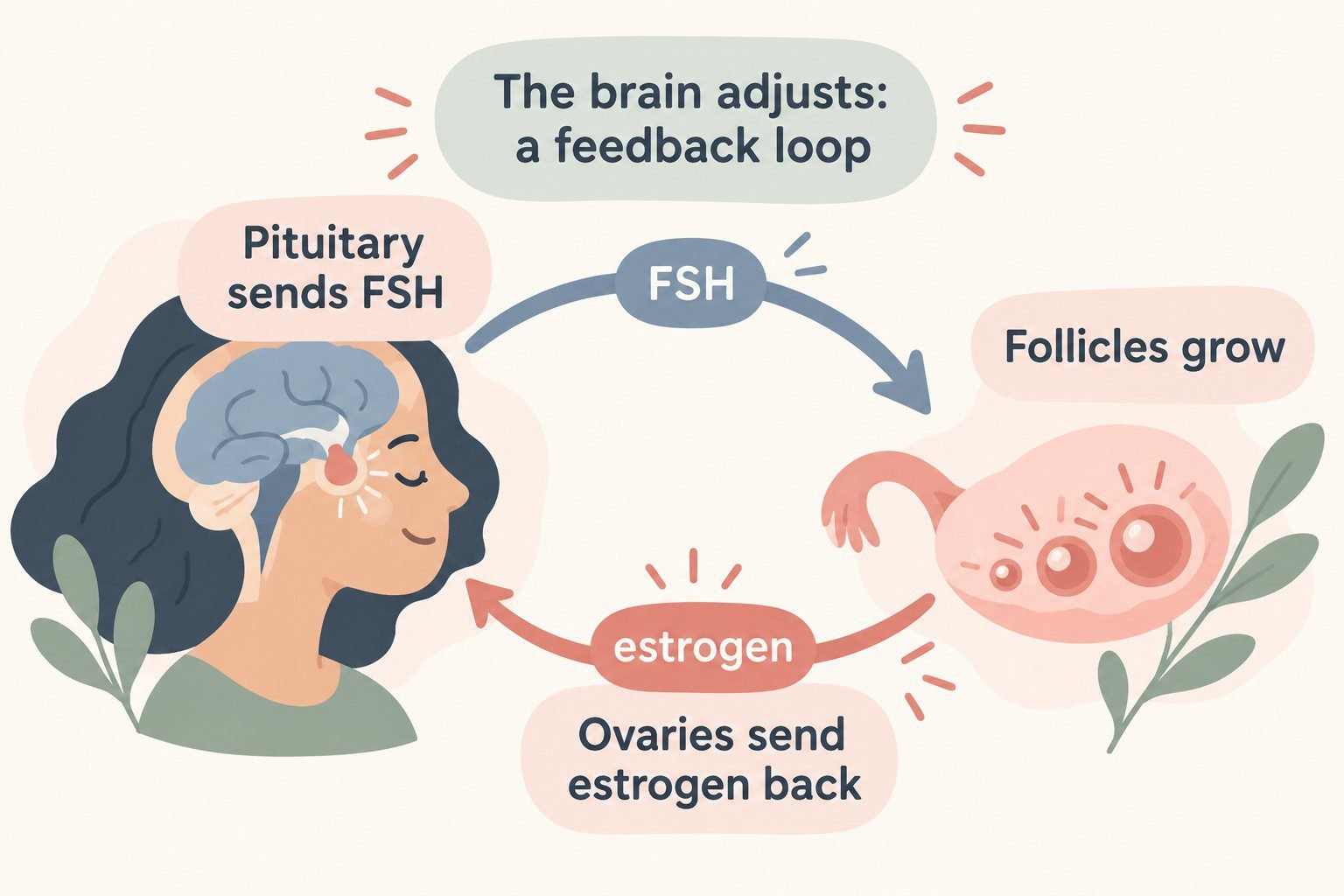
Each month, FSH encourages small sacs in your ovaries, called follicles, to grow. Each follicle contains an immature egg. Your ovaries and brain are constantly in conversation: as follicles grow and make estrogen, the brain adjusts how much FSH it sends. It’s a feedback system, not an on/off switch.
The Society for Endocrinology explains FSH and its regulation. For the ovarian hormones that respond to it, see estrogen vs. progesterone.
Why might your doctor check FSH?
FSH testing can be part of looking into changes in your periods, fertility concerns, or certain pituitary and reproductive conditions. The MedlinePlus FSH test guide explains these uses.
That’s why your friend’s FSH test might mean something completely different from yours. Same test name, different question.
Scroll sideways to see all columns.
| Situation | Question worth asking |
|---|---|
| Checking your menstrual cycle | Was the sample taken at a specific point in my cycle? |
| Menopause-related concerns | Why is testing useful in my situation? |
| Fertility investigation | What other results do we need alongside FSH? |
| Comparing with an older result | Were the timing, lab, and circumstances similar? |
Why timing changes the number
FSH naturally rises and falls through your cycle, so your doctor may ask you to test on a particular day. Hormonal medicines, including birth control, can also affect the result. MedlinePlus describes preparation and how FSH results are read.
That’s why a screenshot without the test date and context can be misleading, and why there’s no single “ideal FSH” number for everyone.
What about home menopause tests?
Some home tests measure FSH in urine. The FDA explains that a positive result doesn’t confirm menopause or perimenopause, and a negative result doesn’t rule them out. Don’t use these results on their own to decide about contraception. Read the FDA’s menopause home-test information.
For the bigger picture, see our guide to perimenopause hormone tests.
What you can do with your result
Keep your original report, then ask your doctor:
- What was this test meant to find out?
- Was it taken at the right time for that purpose?
- What other information do we need to interpret it?
- Does this result change what we do next?
- If it doesn’t explain my symptoms, what should we look at instead?
Frequently asked questions
What does a high FSH level mean?
It depends on your age, cycle timing, and situation. A high FSH can be one sign that the ovaries are responding less, but it needs to be interpreted with other information.
Can FSH tell me if I’m in menopause?
Not on its own, especially during perimenopause when levels fluctuate. Your age, periods, and symptoms matter more.
Does FSH measure fertility?
No. It’s one piece of a fertility assessment, not a fertility score.
Explore the wider system in your menstrual cycle explained and the hormone glossary.