

“How long has this been going on?” Your doctor asks, and your mind goes blank. Was the exhaustion worse last month or the month before? Do the headaches come before your period, or is that just a feeling?
When symptoms come and go, they’re hard to remember and even harder to describe in a short appointment. A simple tracker helps. One or two minutes a day can help turn “I just feel off” into notes you can talk about, even when there is no clear pattern.
That’s why we made a free, fillable tracker you can download below. Fill it in on your phone or computer, or print it and use a pen.
Why tracking helps
Many hormone-related changes follow a rhythm, like your menstrual cycle, the seasons of perimenopause, or simply your sleep. Day to day, it’s easy to miss those connections. On paper, they often jump out. A tracker helps you:
- Spot patterns: see whether symptoms line up with your cycle, sleep, or stress.
- Explain things clearly: show your doctor what happened instead of relying on memory.
- See what’s changing: notice whether symptoms improve after a change in routine or treatment.
- Feel more in control: it’s easier to ask good questions when you know your own pattern.
Download your free symptom tracker
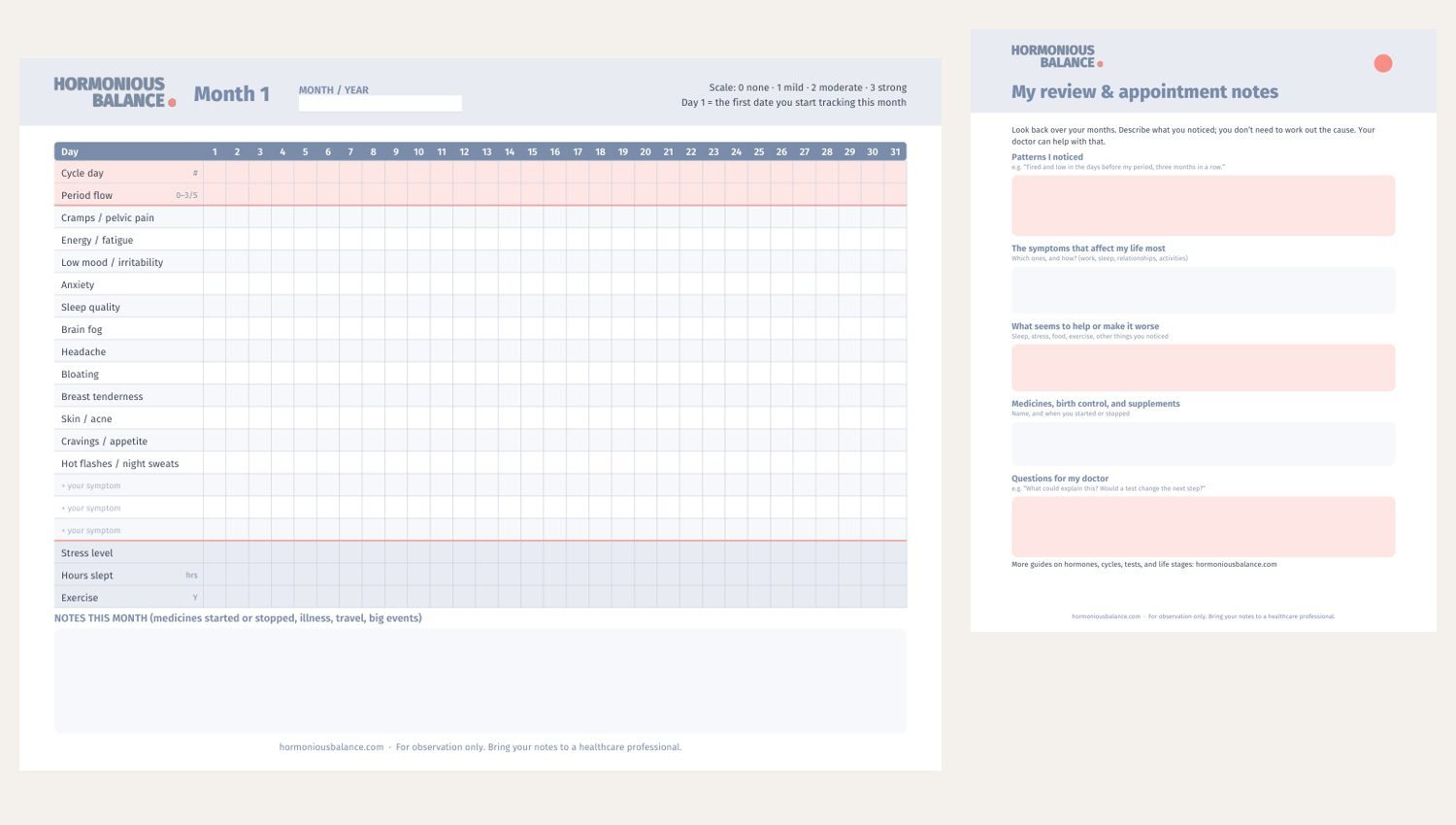
The tracker is a fillable PDF with three monthly pages and a review page for your appointment notes. Two to three months can help reveal cycle-linked patterns. You can bring notes to an appointment sooner; you do not need to finish the tracker before asking for help.
Download the free tracker (PDF)
What’s inside the tracker
- A how-to page with the simple 0–3 scale and quick codes.
- Three monthly grids (31 days each) with ready-made rows and three blank rows for your own symptoms.
- A notes box on every month for things like new medicines, illness, or travel.
- A review page to write down patterns, what helps, and your questions for your doctor.
For cycle-related concerns, ACOG describes keeping a daily symptom record for two to three months. This tracker is a general observation aid, not a validated diagnostic score.
What you can track
You don’t need to fill in every row. Focus on what bothers you most. The tracker includes:
| Area | Rows in the tracker |
|---|---|
| Your cycle | Cycle day, period flow, cramps or pelvic pain |
| Energy and mood | Energy and fatigue, low mood or irritability, anxiety |
| Body | Headache, bloating, breast tenderness, skin and acne, cravings and appetite |
| Sleep and midlife | Sleep quality, brain fog, hot flashes and night sweats |
| Daily life | Stress level, hours slept, exercise |
| Your own | Three blank rows for anything else, like hair changes or joint aches |
Want to learn more about a symptom? Browse our signs and symptoms guides.
How to use it in 5 simple steps
1. Choose what to track
Pick the symptoms that bother you most. Five to ten rows is plenty. You can always add more later.
2. Take a minute each day
Fill it in at about the same time every day, for example before bed. Missed a day? No problem. Just carry on the next day.
3. Use the 0–3 scale
For symptom rows, rate how much that symptom troubled you: 0 none, 1 mild, 2 moderate (it affects your day), 3 strong (it’s hard to get through the day). For sleep quality, score the impact of poor sleep rather than how good your sleep was. Use the PDF’s separate codes for period flow, cycle day, hours slept, and exercise.
4. Note what else is going on
Add hours of sleep, your stress level, and whether you exercised. Use the monthly notes box for things like starting a new medicine, being sick, or a stressful week at work. The numbered grid starts with your first tracking date; cycle day 1 is the first day of your period, so these numbers may differ.
5. Review after two or three months
Look across the rows. Do some symptoms cluster in the same days of your cycle? Do bad nights come before foggy days? Write what you notice on the review page and bring it to your appointment.
For example, you might say: “I’ve tracked for three months, and my tiredness and low mood are worse in the week before my period every time.” That one sentence gives your doctor a lot to work with.
Tips that make tracking easier
- Keep it short. A number is enough; you don’t need to write notes every day.
- Track good days too. They help show what’s working.
- Save a copy each month if you fill it in on screen, so nothing gets lost.
- Describe, don’t diagnose. Write what you notice, and leave the “why” for your conversation with a doctor.
Making sense of your patterns
A tracker shows when things happen, not why. Patterns you might notice include:
- Cycle-linked symptoms: mood changes, fatigue, or bloating that show up in the days before your period. Our menstrual cycle guide explains how hormones change across the month.
- Sleep connections: poor nights followed by brain fog or low mood the next day.
- Stress links: busy, stressful days followed by more symptoms.
- Midlife changes: periods becoming irregular alongside hot flashes or night sweats. Read perimenopause vs. menopause for context.
A pattern isn’t a diagnosis, but it’s a great starting point. Your doctor can help you work out what’s behind it and whether any tests would help. See hormone testing for women for questions to ask.
Keep your saved copy somewhere private, and share it only with people you choose. You fill it in using your own PDF app or on paper; this page has no form for submitting symptom entries.
When not to wait for your tracker
Tracking is for patterns over time. Don’t wait for the end of the month if you have severe pain, very heavy bleeding with dizziness or fainting, or symptoms that suddenly get much worse. Get medical advice right away.
Frequently asked questions
How long should I track my symptoms?
Two to three months is a good goal. Many hormone-related changes follow a monthly rhythm, so several cycles show patterns more clearly than a few weeks.
What if I forget a few days?
Just pick up where you left off. Some information is much better than none.
Can a symptom tracker diagnose a hormone imbalance?
No. It’s a tool for noticing patterns. A healthcare professional can assess your symptoms and decide whether tests are needed.
Can I use it if I don’t have periods?
Yes. If you’re postmenopausal, pregnant, or use birth control that stops your periods, skip the cycle rows and track your other symptoms, sleep, and stress.
Can I fill it in on my phone?
Use a PDF viewer that supports fillable forms, and check that your entries remain after saving and reopening your copy. A desktop or tablet may be easier for the monthly grid. You can also print it.