


You sleep eight hours and still wake up drained. By mid-afternoon, you’re fighting to keep your eyes open, and your usual routine feels like climbing a hill. You’ve seen posts saying it’s your hormones, your adrenals, or your cortisol, and that a supplement will fix it.
Your fatigue is real, even when the cause isn’t clear yet. Hormones can be part of the explanation, but tiredness on its own can’t point to a specific hormone, and it certainly doesn’t prove you need a “balancing” supplement. The best first step is to describe your fatigue clearly and look at the whole picture.
What does fatigue mean?
Fatigue can mean feeling weary, having no energy, or being so exhausted that it gets in the way of daily life. It can come from sleep problems, emotional stress, medicines, or medical conditions. Fatigue that lasts deserves attention. MedlinePlus explains fatigue and its range of causes.
It helps to be specific. Is it mainly low energy? Falling asleep during the day? Getting worn out quickly? Feeling unwell after activity? You don’t need the medical terms; just describe what’s changed.
How hormones can be involved
One well-known hormonal cause is an underactive thyroid, which can cause tiredness along with other symptoms. But many of those symptoms are common and don’t necessarily mean thyroid disease, so testing is needed to check. NIDDK explains hypothyroidism and its diagnosis.
If you see TSH, T4, or T3 on your results, our thyroid test guide explains what they mean.
Hormone shifts around perimenopause can also affect energy, often indirectly through night sweats and broken sleep. Read more in perimenopause vs. menopause.
Other common causes
Anemia, a shortage of healthy red blood cells, is a common cause of tiredness and weakness, especially if you have heavy periods. NHLBI describes anemia symptoms. Other possibilities include poor sleep, stress, low mood, medicines, and other health conditions.
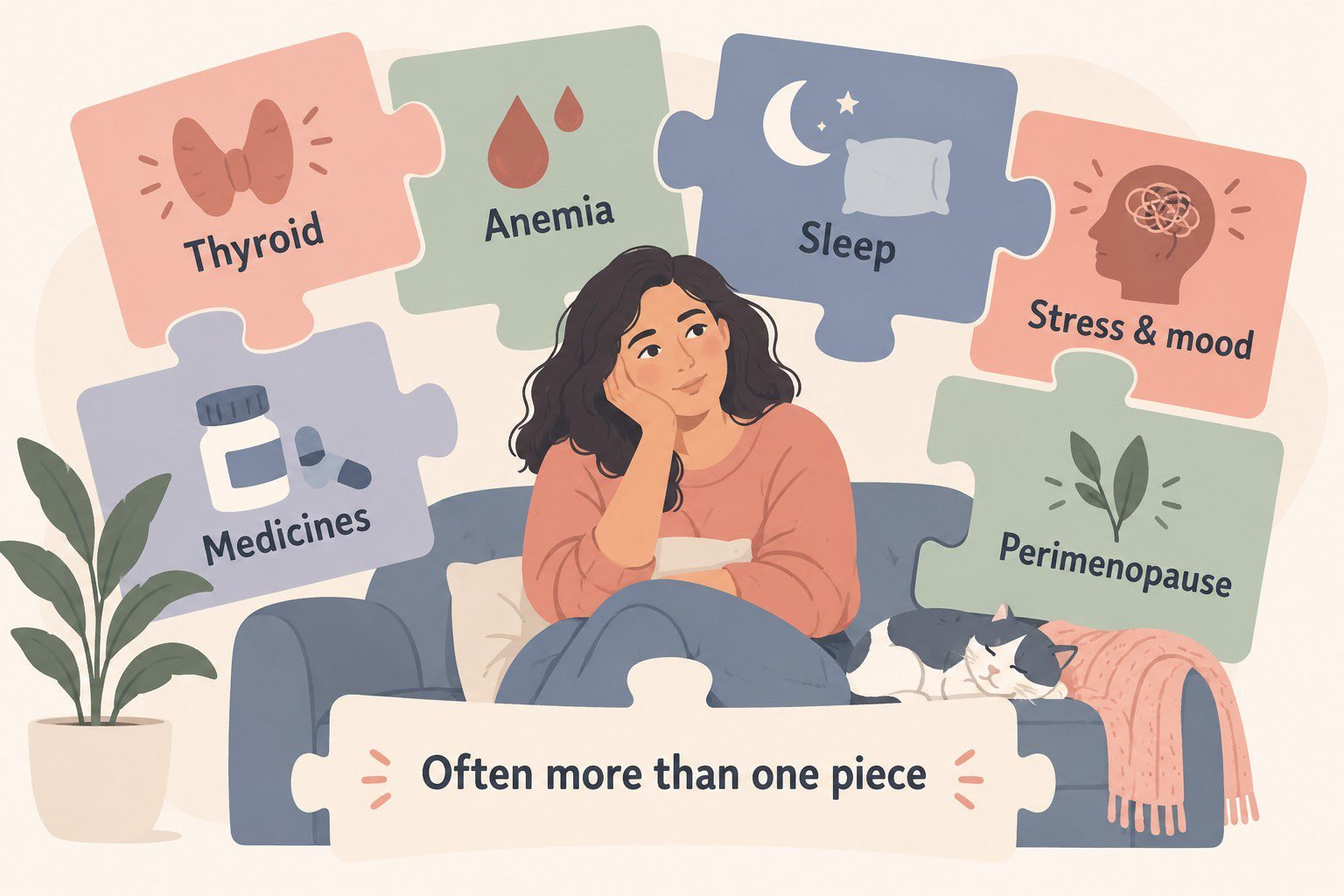
Often, more than one thing is going on at once. That’s why “Which hormone is low?” can be too narrow a question. It helps to discuss sleep, medicines, bleeding changes, and mood together.
What about “adrenal fatigue”?
The Endocrine Society states that scientific evidence doesn’t support “adrenal fatigue” as a medical condition. Tests and supplements marketed for it can distract you from finding the real cause. This is different from genuine adrenal diseases, which need proper testing. Read the Endocrine Society’s explanation.
Questioning the label doesn’t mean dismissing how you feel. It means you deserve an explanation that holds up.
What you can do: keep a short fatigue record
Scroll sideways to see all columns.
| Note | What to write down |
|---|---|
| Start | When it began; whether it came on suddenly or gradually |
| Pattern | Whether it’s constant, comes and goes, or follows certain activities |
| Impact | What’s become harder compared with your usual day |
| Sleep | Your sleep pattern and whether rest feels refreshing |
| Context | Other symptoms, period changes, medicines, supplements, and recent life events |
This is a way to communicate clearly, not a scoring system to diagnose yourself. Meanwhile, gentle basics can help you get through the day: regular sleep hours, regular meals, and asking for help with tasks where you can. Tell your clinician if activity brings on a marked or lasting worsening of symptoms, rather than pushing through it.
When to talk to a doctor
MedlinePlus advises contacting a healthcare professional when tiredness has lasted for weeks. Don’t wait if fatigue comes with new severe symptoms, such as shortness of breath, chest pain, or fainting; get prompt care.
At your appointment, it can help to ask: “What explanations are we considering?” “Would a test change what we do next?” and “When should we review this if it continues?” If a hormone test is suggested, ask what question it will answer.
Frequently asked questions
Which hormones cause fatigue?
Thyroid problems are a well-known hormonal cause, and hormone changes in perimenopause can disrupt sleep. But many non-hormonal causes, such as anemia, are also common.
Is adrenal fatigue real?
The tiredness is real, but “adrenal fatigue” isn’t a recognized medical diagnosis.
What blood tests check for fatigue?
It depends on your symptoms and history. Your doctor will choose tests based on the most likely explanations.