

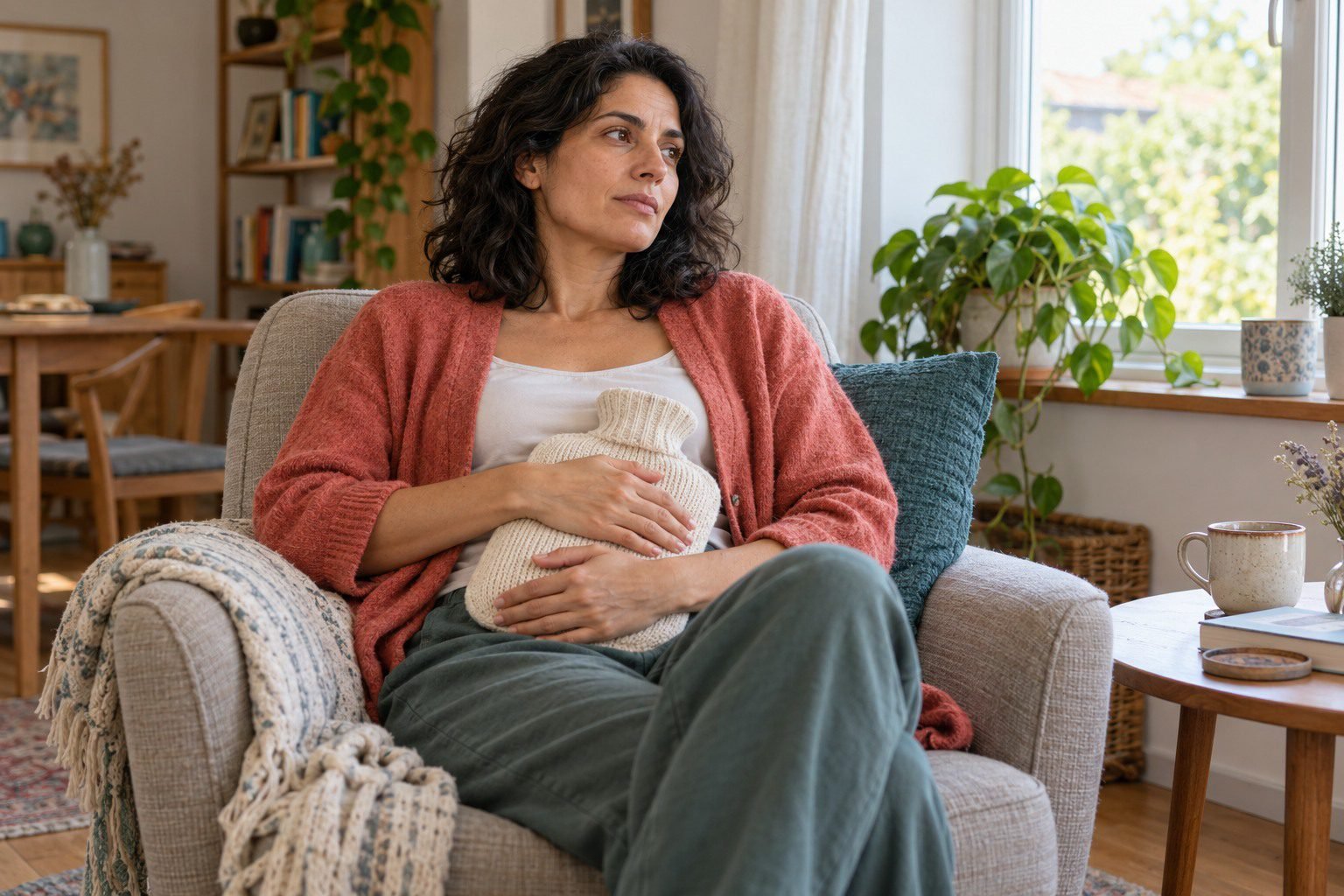
Maybe in your twenties, a hot water bottle and a quiet evening did the trick. Now, in your late 30s or 40s, the cramps feel deeper, last longer, or come with heavier bleeding. Maybe your mood dips harder, too. You might wonder: isn’t this supposed to get easier with age?
In this article
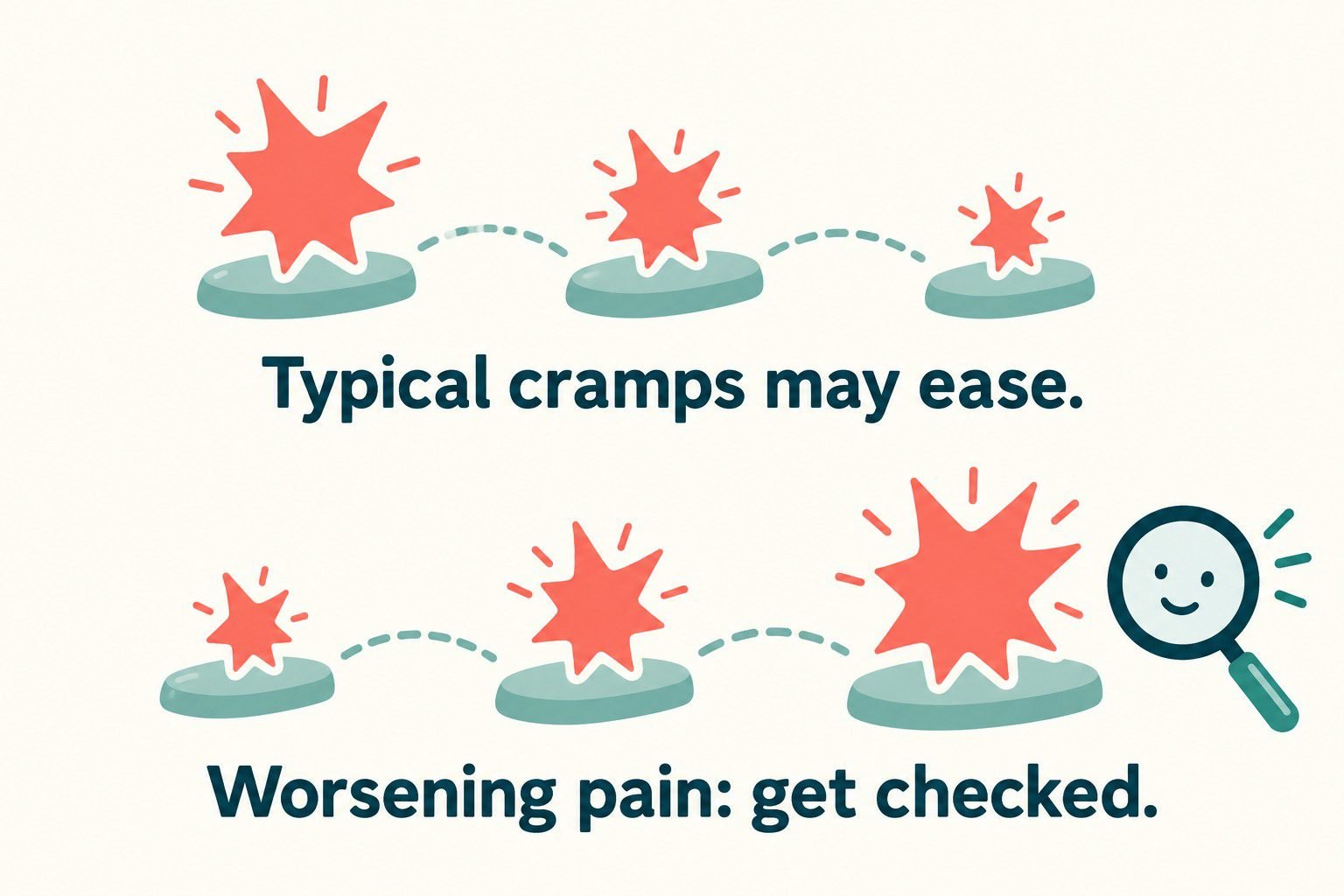
For many people, typical period cramps do ease over time. So when pain gets worse instead, it’s a useful signal, not something you just have to put up with. A clinician can help investigate the change and discuss ways to manage the pain. You can also try simple comfort measures while arranging care.
Two kinds of period pain
ACOG explains two types of period pain:
- Primary dysmenorrhea: the most common kind. It isn’t caused by another condition. It usually begins soon after periods start and may lessen over time.
- Secondary dysmenorrhea: pain caused by a condition of the uterus or other reproductive organs. It can emerge later or become more noticeable over time, but it can also affect younger people. The pain may begin before your period and continue after it ends.
A change from your own usual pattern is worth discussing, whatever your age. The age at which pain starts cannot tell you which type you have.
Why periods hurt in the first place
ACOG links typical cramps to prostaglandins, chemicals made by the uterus that make its muscle tighten and relax. Think of them as the uterus’s “squeeze” signal. More prostaglandins can mean stronger squeezes and stronger cramps. Anti-inflammatory medicines can reduce these signals, but whether a medicine is suitable depends on your health history.
Common reasons pain can increase with age
Uterine fibroids
Fibroids are growths in or around the uterus that are almost always noncancerous. The Office on Women’s Health (OWH) notes they become more common with age, especially in your 30s and 40s through menopause. Many cause no symptoms, but some lead to heavy or painful periods, pelvic pressure, or frequent urination. After menopause, fibroids usually shrink.
Adenomyosis
In adenomyosis, tissue like the uterine lining grows into the muscle wall of the uterus. MedlinePlus describes it as more common in the midlife years, though symptoms need assessment rather than an age-based assumption. Symptoms can include heavy or long periods, painful periods that get worse, and pain during sex. Symptoms usually improve after menopause.
Endometriosis
With endometriosis, tissue similar to the uterine lining grows outside the uterus. It can cause very painful periods, ongoing pelvic or lower back pain, and pain during sex, bowel movements, or urination. It can affect people who menstruate at different ages. These symptoms overlap with other conditions and do not establish the diagnosis on their own.
Perimenopause changes
The OWH guide to your menstrual cycle explains that periods in your 40s may become less predictable, shorter or longer, lighter or heavier. Those bleeding changes can occur alongside cramps, but perimenopause should not be assumed to explain new or worsening pain. Learn more about perimenopause vs. menopause.
For example, someone in their mid-40s might notice longer cycles followed by a heavy, painful period. Bringing the dates and pain pattern to an appointment helps the clinician consider perimenopause alongside causes such as fibroids or adenomyosis.
Other possibilities include an infection or pain linked to an IUD. The NHS overview of period pain lists these among causes worth discussing. This is a starting point for questions, not a complete list of causes.
What you can do
MedlinePlus suggests comfort measures such as heat, movement, and relaxation:
- Use heat. Try a warm bath or a heating pad. The NHS advises wrapping a hot water bottle in a towel before placing it on your belly.
- Keep moving. Gentle exercise, like walking, stretching, or yoga, can help.
- Try relaxation. Yoga or meditation can ease tension.
- Rest when you can. Plan lighter days around your heaviest ones if possible.
- Limit alcohol and avoid tobacco.
- Ask about pain relievers. A pharmacist or clinician can help you choose an option. Ibuprofen is not suitable for everyone, including some people with ulcers, kidney or liver conditions, bleeding problems, or NSAID allergies. Check first if pregnancy is possible or you take other medicines. Follow the product label and professional advice rather than combining pain relievers on your own.
- Track your pain. Note which days hurt, whether pain occurs outside your period, how much it interrupts life, and how heavy the bleeding is. Our hormone symptom tracker can help organize your notes. Do not delay care to complete a diary.
If self-care isn’t enough, effective treatments exist, from hormonal options to treatments aimed at the specific cause.
When to talk to a doctor
Ask for an appointment if:
- Self-care and pain relievers don’t help, and pain interferes with daily life
- Your cramps suddenly get worse
- You develop severe cramps for the first time as an adult; do not wait for a particular age
- You have pain during sex, urination, or bowel movements
- You have pelvic pain when you’re not on your period
Also get checked for heavy bleeding. The CDC’s signs include soaking a pad or tampon every hour for several hours, needing to double up, passing clots the size of a quarter or larger, or feeling tired and short of breath. Any bleeding after menopause needs a check, even if it happens only once. For changes in cycle timing, see irregular periods and hormones.
Seek urgent medical advice for pelvic pain with fever or possible pregnancy, or pain that is severe or worse than usual and has not improved with pain relief. Get emergency care for sudden severe pelvic pain or severe pain that is getting worse, especially with faintness, passing out, shoulder-tip pain, difficulty breathing, or heavy vaginal bleeding. The NHS pelvic-pain guidance distinguishes these urgent signs; do not assume severe pain is just your period.
Frequently asked questions
Why are my cramps getting worse as I get older?
Typical cramps often ease with age, so worsening pain can point to a condition like fibroids, adenomyosis, or endometriosis. Perimenopause can also bring heavier periods. A doctor can help find the cause.
Can perimenopause make period cramps worse?
Bleeding can become heavier or less predictable during the transition, and cramps may change too. New or worsening pain still deserves assessment; it should not be written off as an expected part of perimenopause.
Is it normal to have worse PMS in your 40s?
The OWH notes that PMS symptoms may worsen in your late 30s and 40s. PMS and period pain can overlap but are different problems. Our guide to PMS and PMDD explains mood symptoms and when to seek support.
When is period pain an emergency?
Seek emergency care for sudden severe pelvic pain or severe pain that is getting worse, especially with faintness, shoulder-tip pain, breathing difficulty, or heavy bleeding. Pelvic pain with fever or possible pregnancy needs urgent medical advice even without those emergency signs.