


For three weeks of the month, you feel like yourself. Then, about a week before your period, everything gets harder. Small things make you snap. You feel tearful or hopeless. And then, a day or two after bleeding starts, the cloud lifts as if someone flipped a switch.
In this article
If that pattern sounds familiar, you’re not overreacting. Premenstrual symptoms are real, common, and treatable. Useful clues include timing, symptom severity, and impact on daily life. Your doctor considers all three when assessing PMS and PMDD, a premenstrual mood disorder. A familiar pattern is a reason to ask for help, not a diagnosis by itself.
What PMS and PMDD have in common
Both can follow a premenstrual rhythm: symptoms arise after ovulation and improve soon after bleeding starts. For PMDD, symptoms are typically most evident in the final week before a period and become minimal or absent in the week after it. There should be a clearly better part of the cycle.
The Office on Women’s Health (OWH) describes PMS as a mix of emotional and physical symptoms. Some people have mild discomfort, while others find it hard to work, study, or keep up with daily life. You deserve support either way.
How they’re different
Scroll sideways to see all columns.
| Feature | PMS | PMDD |
|---|---|---|
| How common | Very common | Up to about 5% of people of childbearing age |
| Main symptoms | Bloating, breast tenderness, cramps, tiredness, irritability, mood changes | Severe mood symptoms such as anger, deep sadness or hopelessness, anxiety, or feeling out of control, often with physical symptoms too |
| Impact | Ranges from mild discomfort to substantial disruption | Disrupts work, school, relationships, or daily life |
The OWH overview of PMDD describes its symptoms and frequency. The diagnostic criteria summarized in Endotext require at least five symptoms, including at least one core mood symptom: marked mood swings, irritability or anger, depressed mood, or anxiety. The pattern must cause significant distress or interfere with daily life. Your clinician also checks for other conditions and medication effects; counting symptoms alone cannot establish PMDD.
How sensitivity to hormone changes fits in
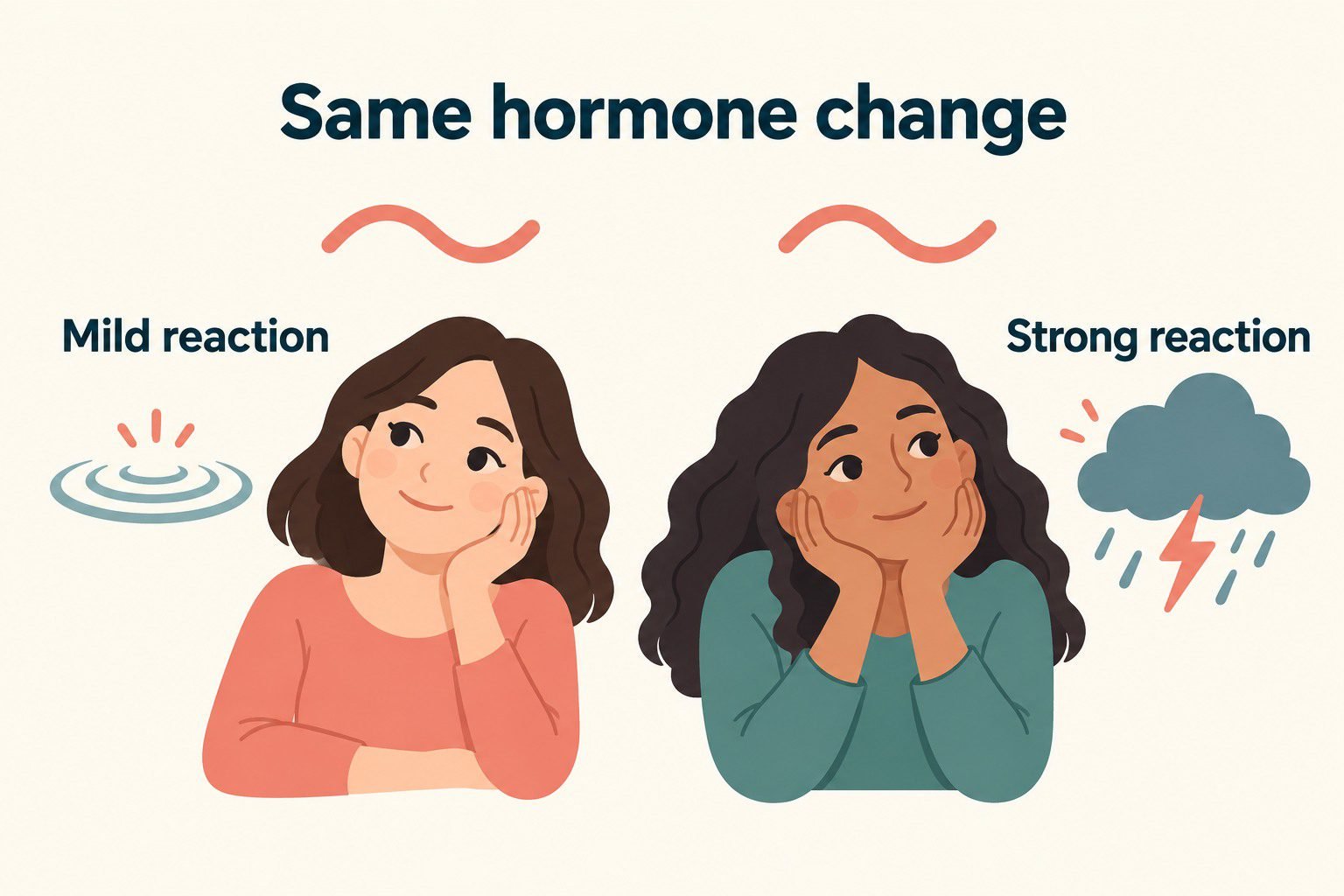
PMDD can occur even when reproductive hormone levels are in the normal range. Research points to differences in sensitivity to normal cycle changes, rather than simply having “too much” or “too little” estrogen or progesterone.
A 2017 NIH research report describes experiments supporting this sensitivity and differences in cells studied in a lab. These findings offer clues about biology; they do not provide a diagnostic test or explain every person’s experience.
Think of two people hearing the same doorbell: one barely notices, while the other jumps. It is a simple comparison for a different response to the same signal, not a measure of willpower. Our guide to estrogen vs. progesterone explains these cycle signals.
There is no blood, saliva, or urine test that confirms PMDD. IAPMD explains that tests can help investigate other possible causes, such as thyroid problems, while daily symptom ratings help establish the cycle pattern.
Why daily tracking matters so much
Your clinician needs a picture of the whole month, including days when you feel well. IAPMD recommends daily ratings across at least two complete menstrual cycles to support assessment. A clinician may make a provisional assessment while tracking continues. You can seek care now; you do not need to wait two cycles to deserve help.
Tracking helps explore two questions:
- Is there a clearly premenstrual pattern? Record when symptoms start, how much they affect you, and when they ease.
- Are symptoms present throughout the month and worse before a period? This can reflect premenstrual exacerbation (PME) of an ongoing condition. Depression or anxiety may need care throughout the cycle. PMDD can also coexist with another condition, so your clinician reviews the full picture.
For example, someone might jot down irritability, sleep, bloating, period days, and whether symptoms interrupted school or work each evening. Our free hormone symptom tracker can organize those observations. It is a general notes tool, not a validated PMDD diagnostic scale. Ask your clinician whether to use the Daily Record of Severity of Problems (DRSP), a more specific daily rating tool.
What you can do
- Start tracking today. Daily ratings, plus period days, can give your clinician a clearer picture.
- Move in ways you enjoy. The OWH lists regular aerobic exercise as one of the lifestyle steps that may ease PMS.
- Protect your sleep. Aim for consistent, adequate sleep, especially in the premenstrual week.
- Notice your own triggers. If caffeine seems to worsen sleep or tension, note that pattern and discuss a manageable change. You do not need a restrictive diet to ask for help.
- Plan around your pattern. If you know which days are hardest, you might schedule lighter commitments or build in recovery time.
- Tell someone you trust. Sharing your pattern can make the hard days feel less isolating.
Self-care may ease some symptoms, but it may not be enough when symptoms are severe. ACOG describes care options including certain antidepressants called SSRIs, some combined birth control pills, and cognitive behavioral therapy (CBT), a skills-based talk therapy. Your clinician can discuss benefits, side effects, and what fits your health history and preferences. Do not start, stop, or change a medicine on the basis of a tracking pattern alone.
When to talk to a doctor
- Premenstrual symptoms interfere with work, school, or relationships
- You feel hopeless, panicky, or out of control before your period
- Symptoms keep returning, or self-care is not giving enough relief
- Your symptoms don’t go away after your period, or are new and getting worse
Bring any tracking notes you have, along with medicines and birth control you use. An appointment can start with a few observations; a completed diary is not an entry requirement.
If you have thoughts of harming yourself, seek urgent help now. Do not wait for your period to start or for a tracking diary to be complete. If you might act on those thoughts or cannot stay safe, contact local emergency services or go to the nearest emergency department. If possible, ask someone you trust to stay with you while you get help.
Frequently asked questions
How do I know if I have PMDD or severe PMS?
Both can be disruptive. PMDD has specific symptom and timing criteria, including core mood symptoms and significant distress or interference with daily life. Daily ratings across at least two cycles and a clinician’s assessment help distinguish the possibilities. Seek care sooner when symptoms are hard to manage.
Can a hormone test diagnose PMDD?
No hormone test confirms PMDD. A clinician uses your symptoms, their timing, and their impact, and may order tests to look for other possible causes.
Can PMS get worse with age?
It can. The OWH notes that symptoms may become stronger in your late 30s and 40s as you approach menopause. PMS usually stops after periods end.
Does PMDD go away?
PMDD symptoms are linked to ovulatory cycles and generally resolve after natural menopause. Other mood conditions may continue and still deserve care. Before menopause, treatment can help; you do not have to wait for your periods to end.