

It’s the day before your period. Your lower belly aches, you’re tired, and suddenly you want bread, chocolate, or chips, and nothing else sounds right. Then you can’t decide what to eat at all. Sound familiar?
In this article
You’re not imagining it, and you’re definitely not “weak.” Appetite changes are a recognized part of the premenstrual stretch for many people. Understanding what’s going on can take some of the guilt out of it, and a few simple habits can help you feel steadier.
Cravings are a common premenstrual symptom
The Office on Women’s Health (OWH) lists appetite changes and food cravings among common PMS symptoms. The luteal phase is the stretch between ovulation and your period.
These symptoms often start in the week or two before bleeding and ease within a few days after your period begins. If you’d like to understand that phase better, see our guide to the luteal phase.
What may be behind the extra hunger
Researchers are still working this out, but a few ideas have support:
- Hormone shifts. Hormone changes are one proposed part of the picture, but OWH notes that the exact cause of PMS is still uncertain. Craving a particular food does not tell you your estrogen or progesterone level. Our guide to estrogen vs. progesterone explains what each does.
- A small change in energy use. A systematic review in PLoS ONE combined 26 studies involving 318 women and found a small average increase in resting energy use in the luteal phase. The studies had measurement limitations; the difference was smaller and not statistically significant in the studies published from 2000 onward. This cannot tell you how much extra food an individual needs.
- PMS itself. A 2025 study of 150 young women found higher questionnaire scores for “hedonic hunger,” or interest in food for pleasure, among participants classified as having PMS. This was an observational questionnaire study, with an average participant age of 22. It shows an association, not proof that PMS caused the hunger or that everyone will have the same experience.
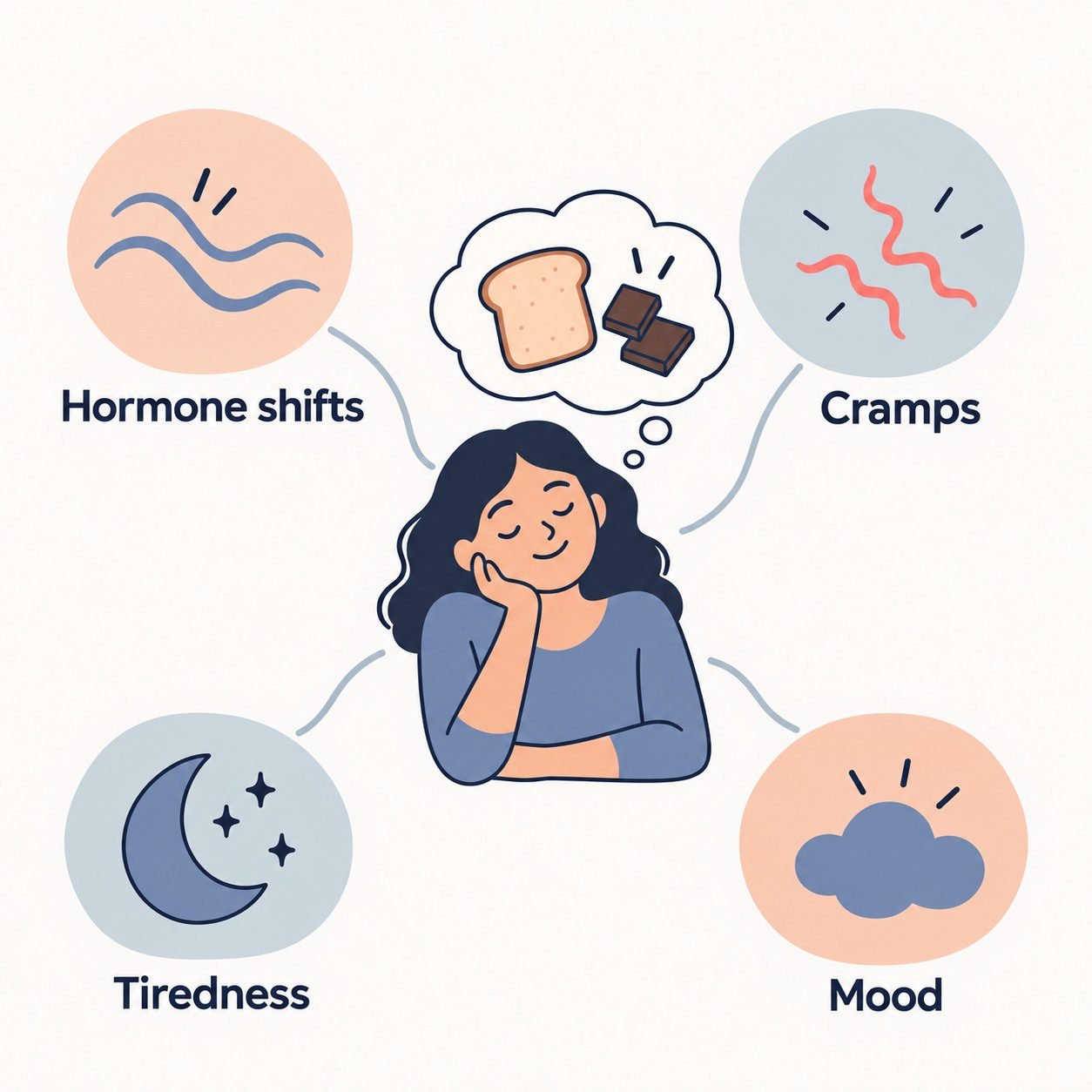
- Pain, tiredness, and mood. NIH’s sleep guidance explains that too little sleep can affect hunger. Cramps and low mood can also make everyday meal decisions feel harder. That practical experience is different from proving that cramps directly cause cravings.
For example, someone might notice that their snack cravings are strongest on the two days when cramps peak and sleep is worst. Noting that overlap may help them plan an easier meal and describe their experience. It cannot reveal which symptom caused the craving.
Why cramps and cravings often show up together
MedlinePlus explains that period cramps are linked to prostaglandins, natural chemicals that make the uterus squeeze. Pain and fatigue may also be present when your appetite changes. If cooking feels like another task on a crampy day, having an easy meal available is a practical kindness to yourself. The overlap does not mean prostaglandins are a proven cause of cravings.
If your period pain has been getting worse over time, read period pain getting worse with age.
What you can do
- Eat regularly. Make room for meals and snacks that fit your day instead of skipping food to compensate for a craving. NIDDK notes that skipping meals or not eating enough can contribute to binge eating for some people; this does not mean ordinary cravings are an eating disorder.
- Pair carbs with protein and fiber. For example, try toast with eggs or nut butter, or fruit with yogurt. MedlinePlus suggests pairing protein and carbohydrate for a more filling snack. You can also enjoy chocolate; you do not have to earn it by eating something else first.
- Plan easy comfort meals. For example, keep soup, a grain bowl, or pasta with vegetables in mind for a rough day. Choose foods you enjoy and can comfortably eat; these are ideas, not a PMS treatment.
- Allow the food you want. MedlinePlus notes that never allowing sweets can sometimes lead to overeating them. Flexibility may be more useful than a new set of food rules. If eating feels out of control, support can help.
- Use heat and gentle movement for cramps. MedlinePlus suggests a heating pad, warm bath, or light exercise.
- Notice what seems to affect your symptoms. OWH lists limiting caffeine, salt, and sugar among options that may ease PMS. You can discuss changes that suit you; this is not a reason to skip meals or impose a strict premenstrual diet.
- Protect your sleep. Sleep deserves attention alongside food choices; poor sleep can affect hunger. See sleep and hormones.
When to talk to a doctor
- Premenstrual symptoms, including mood or appetite changes, disrupt your daily life. See PMS vs. PMDD
- Your cramps interfere with life and don’t improve with self-care or pain relief, or suddenly get worse; see the MedlinePlus guidance
- You feel out of control around food, or you get stuck in cycles of restricting and overeating. NIDDK recommends sharing these concerns with a health professional
- You notice marked thirst, frequent urination, persistent unusual hunger, or weight loss without trying. These are among the symptoms NIDDK advises discussing with a clinician; do not assume they are just PMS
If food, eating, or your body feel like a constant struggle, you deserve support. The National Alliance for Eating Disorders offers information and free support groups. You do not need to diagnose yourself before asking for help.
Frequently asked questions
Why do I crave carbs before my period?
Appetite changes are a common PMS symptom. Hormone changes, sleep, mood, and the practical demands of uncomfortable days may overlap. Research is still working out their roles, and a craving cannot identify a hormone level.
Do you burn more calories on your period?
A review found a small average rise in resting energy use during the luteal phase, before bleeding, but results were uncertain in more recent studies. That is not proof of a predictable calorie increase during your period or a personal food allowance.
Is it OK to give in to period cravings?
Yes. Enjoying the foods you want, as part of regular meals, is often more helpful than strict rules.
Why am I hungry but nothing sounds good?
You may be dealing with discomfort, fatigue, or low mood at the same time. Try something easy that sounds tolerable, such as soup or toast with a topping you like. If you keep struggling to eat or feel unwell, ask a clinician rather than assuming your cycle explains it.