

Your periods have become irregular, and your doctor orders a few blood tests. One of them is prolactin. You’re not pregnant or breastfeeding, so why would they check a “milk hormone”?
In this article
Prolactin is a good example of a hormone with a famous main job and other important effects. Higher-than-expected levels can interfere with your cycle, but a blood result needs context. Here’s what it does, why it gets tested, and what a result can and can’t tell you.
What prolactin does
Prolactin is made by the pituitary gland, a small gland at the base of your brain that sends signals to many other glands. MedlinePlus explains that prolactin’s main job is preparing the breasts during pregnancy and supporting milk production after birth.
Levels are naturally high during pregnancy and while breastfeeding. Outside those times, they’re usually low. MedlinePlus also notes that prolactin affects many other body processes.
The pituitary has a whole team of signals. Our guide to anterior pituitary hormones shows how prolactin fits alongside FSH, LH, TSH, and others.
Why prolactin can affect your periods
Prolactin and fertility hormones are connected. When prolactin is high, it can interfere with ovulation. MedlinePlus notes that high prolactin can cause irregular periods and fertility problems. During breastfeeding, high prolactin is expected, and periods may stay away for a while.
Think of it like a dimmer switch. The Endocrine Society explains that excess prolactin can reduce the pituitary signals that support ovarian function. The comparison shows that connection; it does not mean ovulation is fully switched off in every person. Possible signs include:
- Irregular or missing periods
- Breast milk or nipple discharge when you’re not pregnant or breastfeeding
- Difficulty getting pregnant
Breastfeeding or a high prolactin result alone does not establish protection from pregnancy. The CDC’s lactational amenorrhea method has specific requirements; ask your clinician about contraception that fits your circumstances.
Why doctors test prolactin
According to MedlinePlus, a prolactin test is usually ordered along with other tests to:
- Look for the cause of irregular periods or infertility
- Check for a prolactinoma, a noncancerous growth on the pituitary that makes prolactin
- Follow up on milky nipple discharge
- Monitor treatment for a known prolactinoma
Ask what question the test is meant to answer rather than adding it to a panel without a clear reason. Our guide to hormone testing for women explains why the question matters more than the panel.
What can raise prolactin
A high result doesn’t automatically mean something serious. NIDDK describes several possible causes:
- Pregnancy and breastfeeding, which raise it naturally
- A prolactinoma, a noncancerous pituitary growth
- Certain medicines
- An underactive thyroid (hypothyroidism). See TSH, T4, and T3 explained
- Kidney disease or a chest injury
- Everyday factors, such as stress, exercise, sex, or a high-protein meal, which can cause small increases
Because so many things can nudge it, doctors often repeat a mildly high result or check other tests before drawing conclusions. For example, someone might get a slightly high result after a stressful blood draw. A repeat test may help clarify it; stress should not simply be assumed to explain a result that stays high.
In some cases, the Endocrine Society notes that the lab may check macroprolactin, a form that can make a result look high without the usual effects. Your clinician decides which follow-up fits. There is no single number here that diagnoses a tumor or tells everyone whether treatment is needed.
What you can do
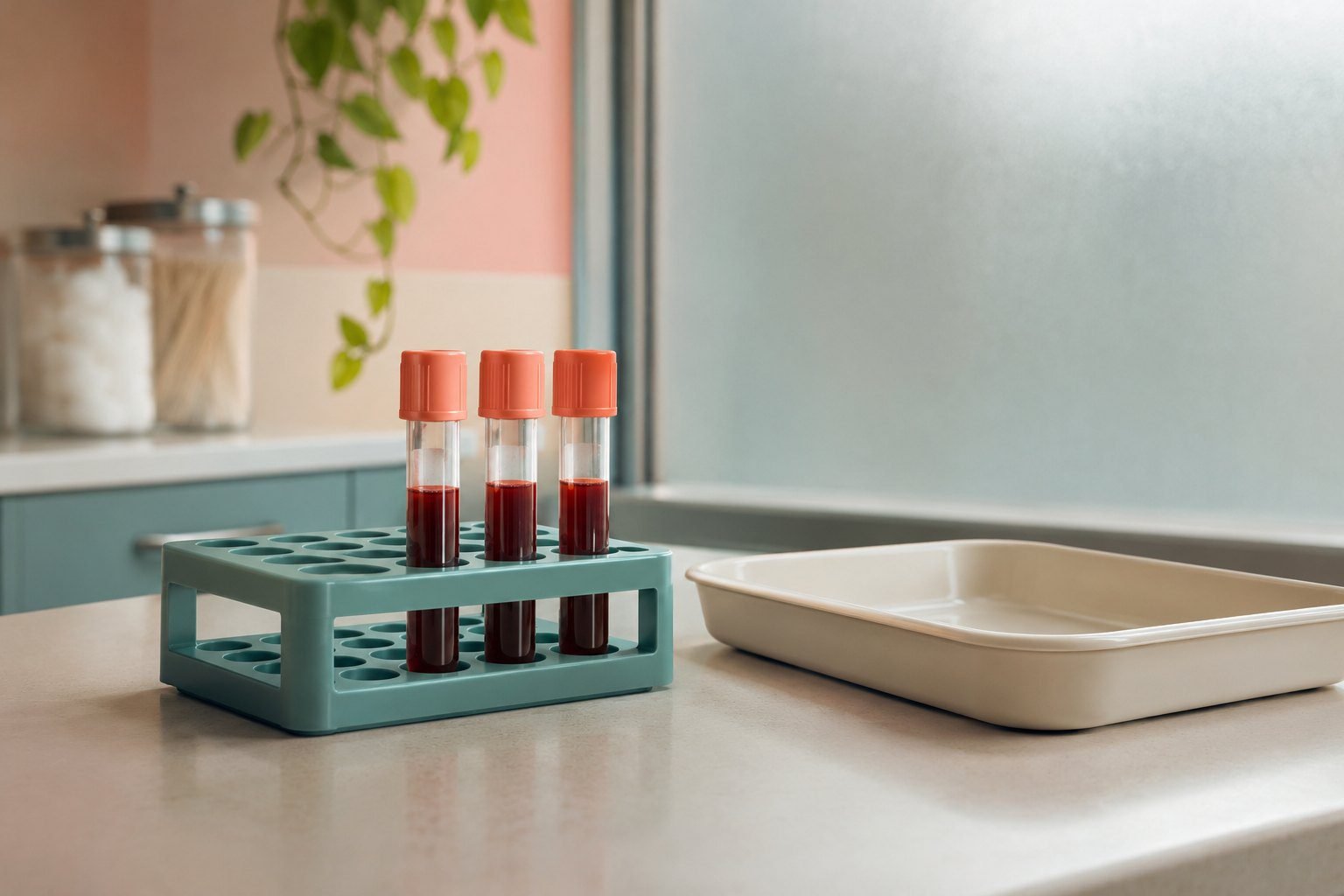
- Ask how to prepare. MedlinePlus notes that levels change through the day, so blood is often drawn about three to four hours after you wake up. Your provider may also ask you to fast for a few hours.
- Share your medication list. Include supplements. Some medicines can raise prolactin. Don’t stop any medicine without talking to your provider first.
- Mention all your symptoms. Irregular periods, nipple discharge, headaches, or vision changes help your doctor interpret the result.
- Ask what’s next. If your result is high, ask whether a repeat test, a thyroid test, or a pregnancy test is the next step.
When to talk to a doctor
- You have milky nipple discharge and you’re not pregnant or breastfeeding
- Your periods have become irregular or stopped, and you’re not pregnant
- You’ve been trying to get pregnant without success
- You have new, persistent headaches or changes in your vision, especially along with any of the above
Larger prolactinomas can press on nearby areas and cause headaches or vision problems, according to MedlinePlus. Prolactinomas are noncancerous, and treatment is often effective. The right approach depends on the cause and your individual situation.
A sudden severe headache, especially with new vision loss or double vision, needs emergency assessment. MedlinePlus describes rare bleeding into a pituitary tumor as a medical emergency; these symptoms can also have other urgent causes.
Frequently asked questions
What does high prolactin mean?
It can mean many things, from pregnancy or a medicine side effect to an underactive thyroid or a pituitary growth. One result needs context, and sometimes a repeat test.
Can stress raise prolactin?
Yes, stress can cause small increases. That’s one reason a mildly high result may be rechecked.
Can high prolactin cause missed periods?
Yes. High prolactin can interfere with ovulation, which can make periods irregular or stop them.
Do men have prolactin?
Yes. Men make it too, usually at low levels. High levels can affect sex drive and fertility in men as well.