


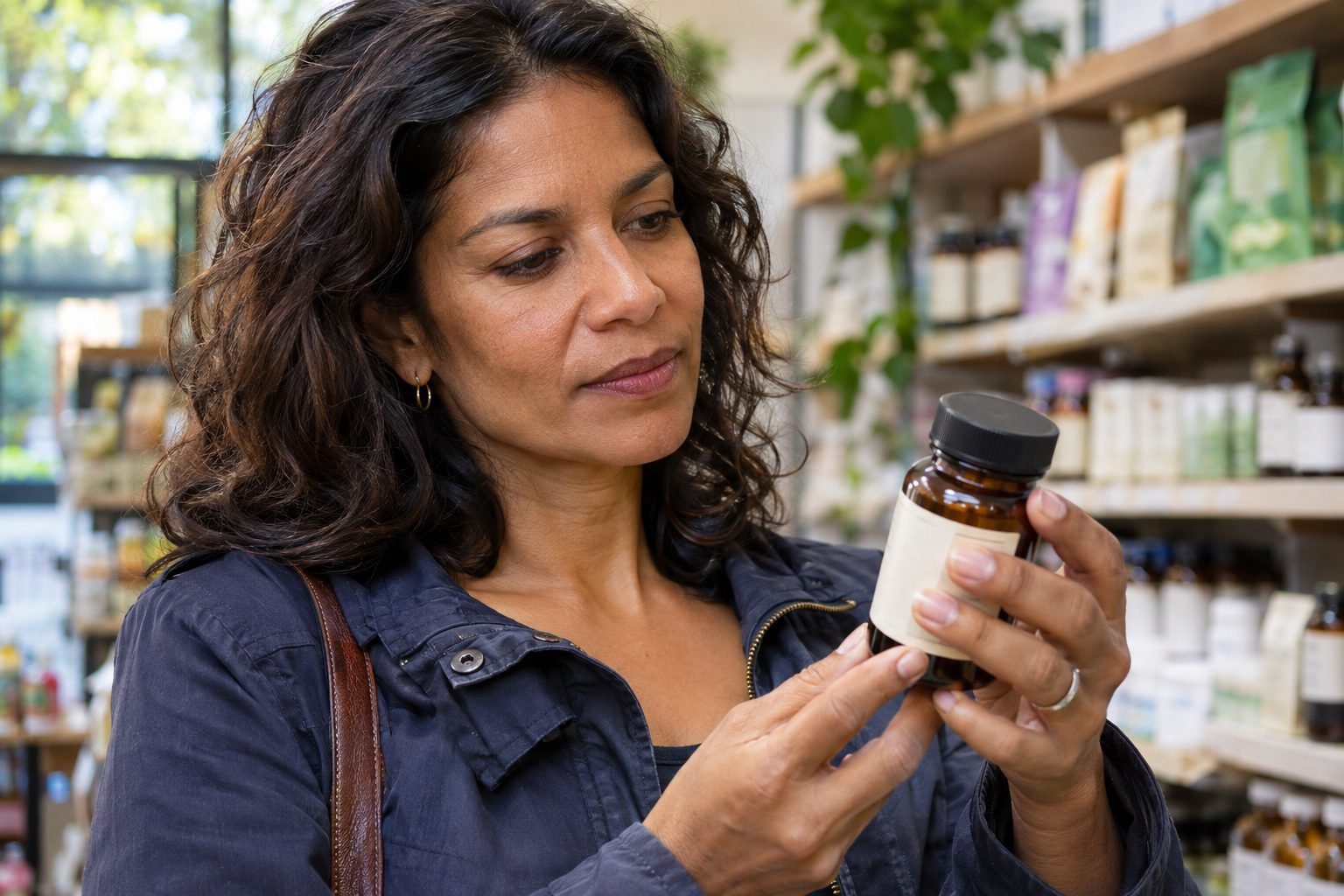
A friend says ashwagandha helped her feel calmer. Your feed calls it a “cortisol fix.” After another restless night, it’s understandable to want a clearer answer before buying a bottle.
In this article
You can look at three questions separately: did people feel better, did a measured hormone change, and was the product safe for the people studied? A promising result on one question does not answer all three.
What ashwagandha is
Ashwagandha, or Withania somnifera, is a shrub with a history of use in Ayurvedic medicine. Supplements may contain root, leaf, or combined extracts. The National Center for Complementary and Integrative Health (NCCIH) notes that studies often used small samples and different preparations. Some preparations may help stress or insomnia; the overall evidence for anxiety remains unclear.
When you see the word “adaptogen,” ask which product was studied and what outcome changed. A label about handling stress cannot tell you your cortisol level or whether a supplement fits your health history. Our adrenal gland guide explains the wider hormone context.
What the cortisol studies show
In a 2019 placebo-controlled trial, 60 adults with self-reported stress received one specific extract or placebo. The extract group had a greater reduction in morning cortisol and one anxiety rating scale. A separate depression, anxiety, and stress questionnaire did not show a statistically significant difference between groups.
The study was funded by the extract supplier. It was small and short, and the participants were not being treated for a diagnosed cortisol disorder. Its findings cannot predict a particular percentage change for you or establish that another product works the same way.
A 2026 trial of 60 stressed adults tested a different extract over 28 days. It found lower self-reported stress in the main analysis and a smaller cortisol response to a laboratory stress challenge. That is a different measurement from everyday morning cortisol.
The stress result was not statistically significant in the per-protocol analysis, which included participants meeting the trial’s protocol criteria. The authors noted the small sample, short duration, and exploratory outcomes; the supplier funded the study. These are preliminary findings, rather than a general treatment promise.
How sleep fits into the picture
A study reporting lower cortisol does not, by itself, show that sleep improved or that a hormone change caused an improvement. NCCIH describes possible benefits for insomnia from some preparations, with limited evidence across products. Persistent sleep problems still deserve their own assessment.
For example, someone may be waking because of night sweats, worry, or another sleep problem. Bringing that pattern to an appointment is more useful than assuming that a difficult night means high cortisol. See our hormones and sleep guide.
Safety questions to check first
NCCIH advises avoiding ashwagandha during pregnancy and not using it while breastfeeding. It is not recommended with thyroid or autoimmune disorders, or before surgery. Long-term safety remains uncertain.
Possible interactions include thyroid hormone, diabetes and blood pressure medicines, sedatives, anti-seizure medicines, and medicines that suppress the immune system. Drowsiness and digestive upset can occur. People with hormone-sensitive prostate cancer should avoid it because of possible testosterone effects.
The FDA explains that dietary supplements are not approved for safety and effectiveness before marketing. A product being available to buy does not settle the safety question.
Take liver warning signs seriously
Australia’s Therapeutic Goods Administration (TGA) warns of very rare liver injury that can be severe. It advises avoiding ashwagandha if you have current or previous liver problems.
If you are taking it, stop and seek medical advice immediately if you develop yellow skin or eyes, dark urine, nausea, vomiting, unusual tiredness, weakness, abdominal pain, or loss of appetite. The TGA also advises stopping and seeing a doctor for sudden vomiting or diarrhea; an acute digestive reaction is not necessarily liver injury.
What you can do
The National Institute of Mental Health suggests practical supports for stress: a sleep routine, movement, regular meals, limiting excess caffeine, and reaching out to people who help you cope.
- Choose a manageable step. For example, ask someone to share a task so you have time for a walk or a meal. These are everyday supports, not a protocol for lowering cortisol.
- Describe what’s difficult. Note sleep, worry, workload, and how symptoms affect daily life. You do not need to prove a hormone problem to ask for help.
- Bring the exact product. If you are considering a supplement, ask your clinician or pharmacist to review its ingredients against your conditions and medicines.
When to talk to a doctor
Ask for help if stress or anxiety keeps interfering with life, or you are struggling to cope. Regular sleep problems and persistent tiredness deserve assessment too. Our fatigue guide covers other possible contributors, and burnout or perimenopause may help you describe overlapping midlife concerns.
Bring any supplement use into that conversation. Do not wait for a routine appointment if you have the warning signs described above.
Frequently asked questions
Does ashwagandha lower cortisol?
Some trials found changes in morning cortisol or responses to a stress challenge. The findings depend on the preparation, participants, and measurement; they do not guarantee a result for you.
Can I use it if I have a thyroid condition?
NCCIH does not recommend it for people with thyroid disorders and notes possible interactions with thyroid hormone medicines. Discuss the product with your care team.
Is it safe during pregnancy or breastfeeding?
NCCIH advises avoiding it in pregnancy and not using it while breastfeeding.
Does a short trial prove long-term safety?
No. A brief study cannot establish the safety of ongoing use or detect every uncommon adverse effect. Check your own health history and medicines before a supplement decision.