


You’re 46. Your periods have started arriving early, then late, then not at all for two months. You’re waking up hot at night and feeling more irritable than usual. You’d love a simple blood test that says “yes, this is perimenopause.” So you ask your doctor, and they say you probably don’t need one. Why not?
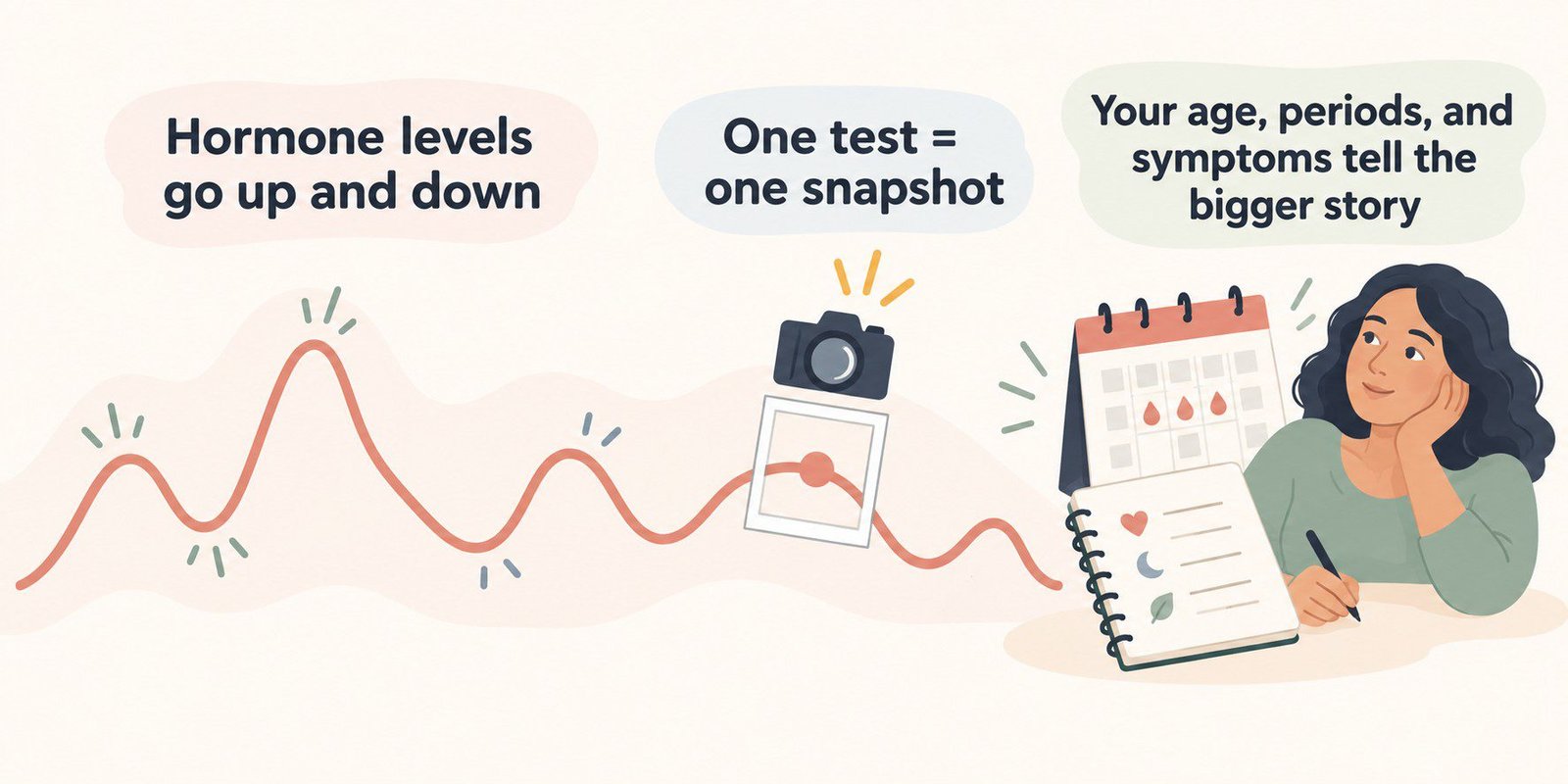
Here’s the honest answer: there’s no single blood test that reliably confirms perimenopause for everyone. Hormone levels can swing a lot during this transition, so one result is only a snapshot. The good news is that your age, your periods, and your symptoms usually tell your doctor more than a lab number would.
Perimenopause vs. menopause: a quick refresher
Perimenopause is the transition toward the end of your reproductive years, when your ovaries’ activity and your periods change. Menopause is generally recognized after 12 months in a row without a period, when nothing else explains it. The Office on Women’s Health explains the stages.
If you use hormonal birth control, have had certain procedures, or take medicines that affect bleeding, your periods may be harder to read, so the calendar rule doesn’t always apply.
Why one hormone test is just a snapshot
Two hormones often come up: FSH (follicle-stimulating hormone), a signal from your brain’s pituitary gland to your ovaries, and estradiol, the main estrogen your ovaries make. Both can be useful in certain situations. But during perimenopause they can change a lot from week to week, and even day to day.
Imagine taking one photo during a storm and trying to describe the whole season from it. The NIH overview of menopause research explains that assessment usually relies on your history and symptoms, with lab tests useful only in selected cases.
When testing can help
ACOG says hormone testing is often unnecessary when your age, symptoms, and changing periods already point to perimenopause. Testing may be offered when changes happen younger, such as before age 45 and especially before 40, to look into early or premature menopause. Read ACOG’s explanation of testing during perimenopause.
So the key question isn’t “what’s the best day to test?” It’s “what would this test help us find out?”
A word on menopause hormone charts
You may find charts online showing “normal” hormone levels for each stage. A good chart explains general patterns. A misleading one treats a single cutoff as a diagnosis for everyone, regardless of the test, your medicines, or your cycle. Before comparing your result to a chart, ask what the chart actually represents.
What you can do: prepare for your appointment
You don’t need to walk in with a diagnosis. A few notes can make the conversation much more useful:
- When your periods started changing, and how
- Which symptoms affect your sleep, work, relationships, or daily life
- Medicines, birth control, and supplements you use
- Your questions: Would a test change the plan? If not now, what’s the follow-up?
Your symptoms deserve attention even when a test isn’t the right first step. Ask what options there are for symptoms that bother you, such as hot flashes or poor sleep.
Frequently asked questions
Can a blood test tell if I’m in perimenopause?
Usually not on its own, because hormone levels fluctuate. Your doctor typically looks at your age, periods, and symptoms instead.
What FSH level means menopause?
There isn’t one number that works for everyone during the transition. FSH results need context, and our FSH guide explains why.
Should I get my hormones tested if I’m under 40?
If your periods change or stop before 40, talk to a doctor. Testing may help assess premature ovarian insufficiency or other causes. ASRM’s guideline explains why changes before 40 need careful assessment.
Want more background? See the hormone glossary and your menstrual cycle explained.