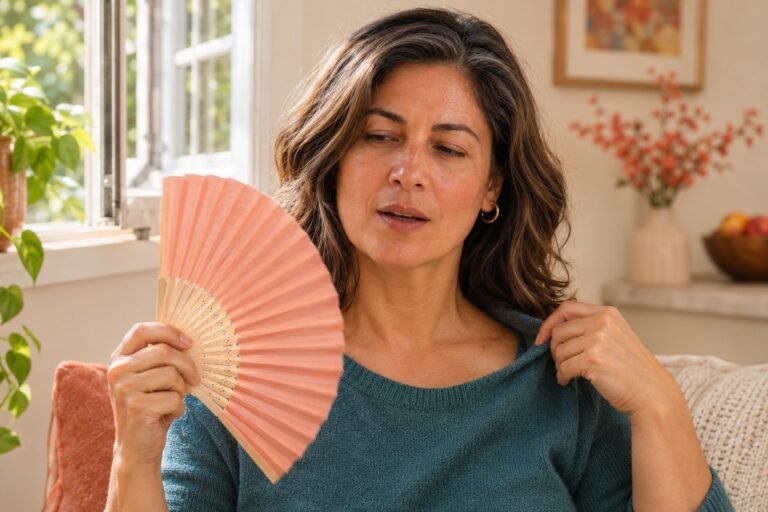


You’re planning dinner and tofu sounds easy. Then you remember a warning that soy could “mess with estrogen.” You may also have heard that it helps hot flashes. How can the same food come with such different claims?
In this article
Soy foods can fit into a varied diet for many people. The details become clearer when you separate the plant compounds in a meal from concentrated supplements, and ask which health outcome the research actually measured.
What phytoestrogens do
Soy contains plant compounds called isoflavones. They belong to a group known as phytoestrogens. The National Cancer Institute defines a phytoestrogen as an estrogen-like substance found in some plants and plant products.
Isoflavones can interact with estrogen receptors, the molecules that help cells receive signals. That interaction does not make a tofu meal equivalent to a dose of estrogen medicine or tell you what your blood estrogen level will be. Our hormone receptor guide explains how receiving a signal depends on the cell and its context.
Soy foods and breast health
The American Cancer Society (ACS) supports soy foods as part of a healthy diet. Its overview explains that early animal studies used high amounts of isoflavones, and that rodents process these compounds differently from people.
Human research has found either lower cancer risk or no change in risk with soy foods. An association with lower risk does not prove that adding tofu will prevent cancer. It also does not establish the same result for an isoflavone supplement.
For people who have had breast cancer, ACS survivorship guidance says soy foods do not appear to raise recurrence risk. The effects of soy or isoflavone supplements remain less clear. If you’re in treatment or considering a supplement, bring the product and your questions to your oncology team.
What about hot flashes?
The National Center for Complementary and Integrative Health (NCCIH) reports that soy protein or isoflavones may have a small effect on hot flashes, with inconsistent findings across studies. The Menopause Society’s 2023 position statement does not recommend soy foods, extracts, or equol as treatments for hot flashes.
You can enjoy a tofu stir-fry as a meal while discussing troublesome symptoms with your clinician. If hot flashes interrupt sleep or daily life, ask about options with evidence for symptom relief. Our perimenopause and menopause guide explains the wider transition.
Foods and concentrated supplements
Scroll sideways to see all columns.
| What to compare | Soy foods | Concentrated isoflavone products |
|---|---|---|
| Examples | Tofu, tempeh, edamame, and soy milk | Isoflavone capsules and extracts |
| What you’re choosing | A food that can contribute protein to a meal | A product supplying selected compounds, sometimes at much higher amounts than food |
| How to use the evidence | Consider food research in the context of the whole diet and the people studied | Check the exact product, purpose, interactions, and safety with your clinician |
ACS does not recommend soy supplements for cancer prevention. A favorable finding about eating soy foods is not a reason to start a concentrated product.
What you can do
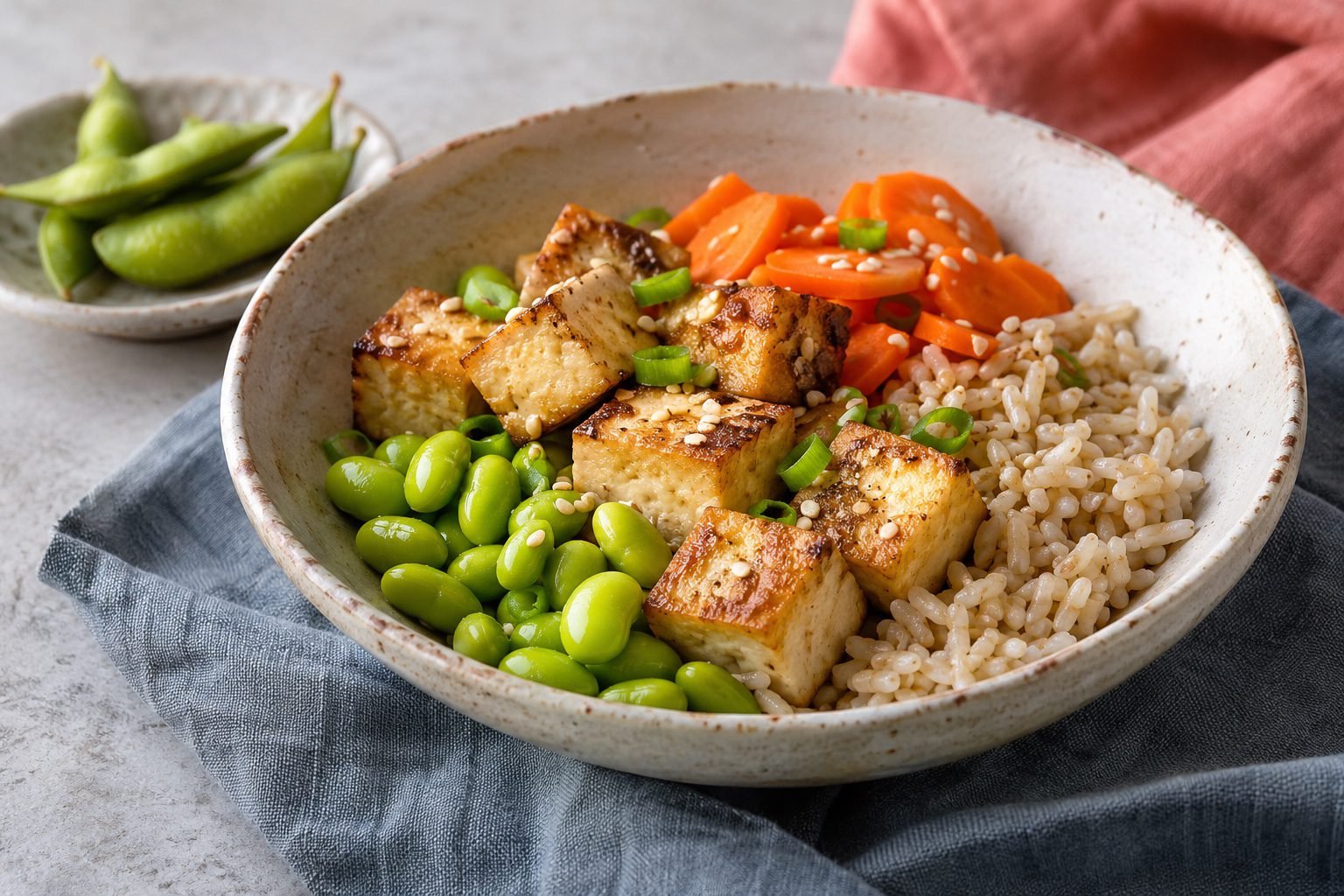
- Choose food you enjoy. For example, add edamame to a rice bowl or try tofu with familiar vegetables. Soy can provide protein alongside the other foods in your diet.
- Check allergy labels. Avoid soy if you have a known soy allergy. NCCIH notes that soy can also cause digestive side effects in some people.
- Ask before using an extract. Discuss concentrated products with your clinician, especially during pregnancy or breastfeeding, with a hormone-sensitive condition, or when you take medicines.
- Review thyroid medicine instructions. MedlinePlus notes that soybean-containing foods may affect how levothyroxine works. Ask your prescriber or pharmacist how your usual food choices fit your treatment instructions.
If you’re looking for a realistic approach to meals, see our guide to hormone-balancing diet claims. Bring a specific symptom or goal to the conversation rather than trying to correct an assumed hormone level through one food.
When to talk to a doctor
Ask for help when hot flashes or night sweats affect your sleep, work, or mood. Discuss soy supplements before starting them if you have a history of breast cancer or another hormone-sensitive condition.
Any vaginal bleeding after menopause needs prompt assessment. The Office on Women’s Health advises seeing your provider right away. Mention any supplements you use when you arrange the appointment.
Frequently asked questions
Does eating soy raise my estrogen level?
Soy isoflavones have estrogen-like activity. That does not predict a particular blood estrogen result after eating soy or mean you need a hormone test because you ate tofu.
Can breast cancer survivors eat soy foods?
ACS says soy foods do not appear to increase recurrence risk. Concentrated supplements raise a separate question, so discuss them with your oncology team.
Should I use soy to treat hot flashes?
The Menopause Society does not recommend soy foods or extracts for this purpose. Ask about treatments that fit your symptoms and medical history.
Is soy milk the same as an isoflavone supplement?
No. Soy milk is a food. A concentrated isoflavone product supplies selected compounds and needs its own evidence and safety assessment.