

You thought you’d left breakouts behind in high school. Now you’re 32, and every month, right before your period, a cluster of painful spots appears along your chin and jawline. Someone online calls it “hormonal acne” and recommends a supplement. Is that what’s going on?
“Hormonal acne” is a helpful everyday phrase for acne where hormones seem to play a role. But it isn’t a separate kind of pimple you can identify from a face map. Understanding how acne actually works can help you make sense of your pattern, and find support that helps.
What happens inside a pore
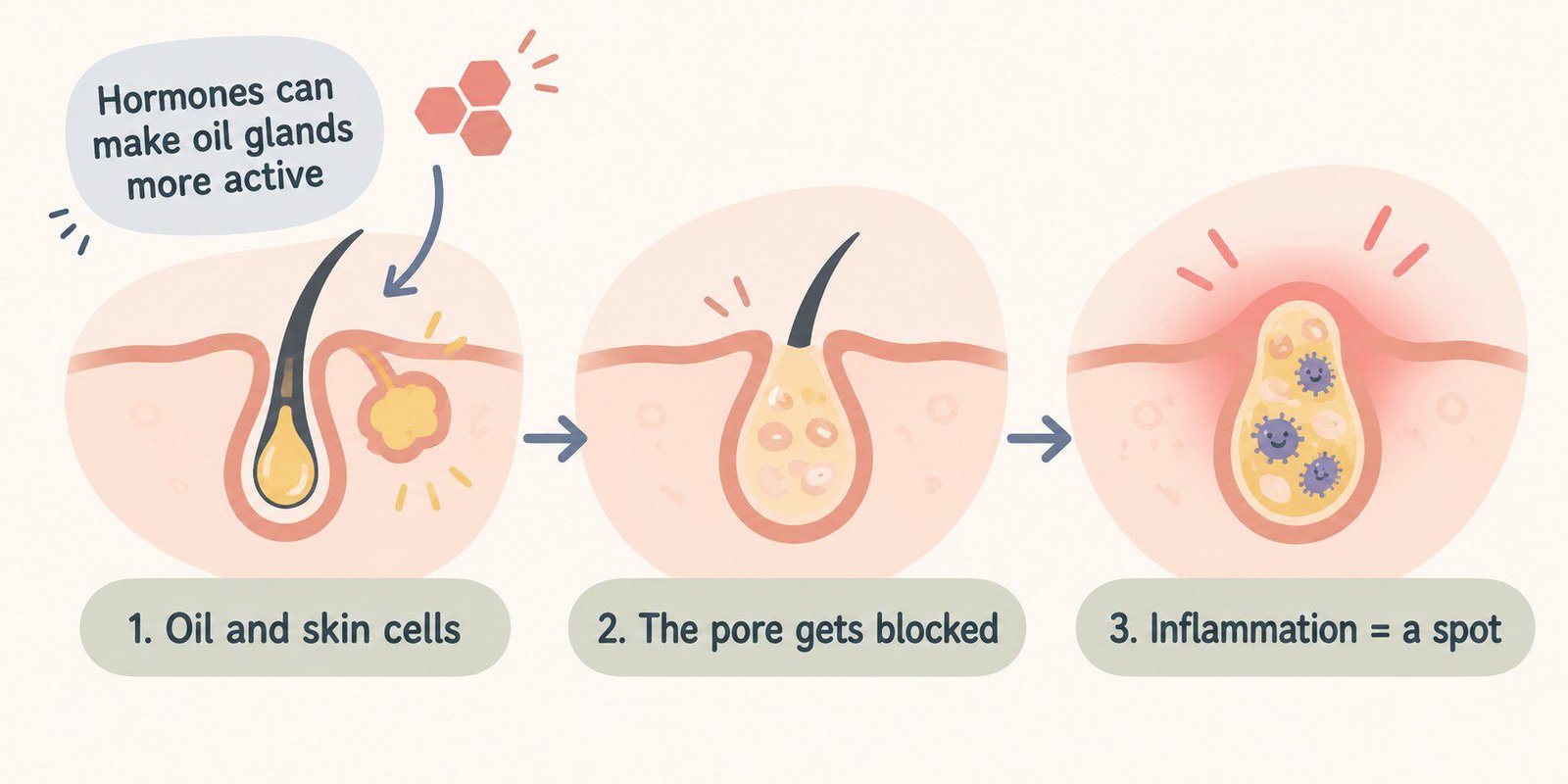
Acne starts when oil and dead skin cells block hair follicles (pores). Bacteria and inflammation then join in, leading to blackheads, whiteheads, or red, painful spots. NIAMS explains how acne forms.
Hormones are part of this process. Androgens can make your skin’s oil glands more active. But hormones aren’t the only factor: family history, certain medicines, and other things can matter too. That’s why there’s rarely one simple fix.
Why acne changes across your life
During puberty, hormone changes ramp up oil production, which is why acne is so common in teens. But many women develop acne as adults, even if they had clear skin as teenagers. The American Academy of Dermatology describes how acne relates to hormones and age.
Adult acne doesn’t mean you did something wrong, and a new breakout doesn’t automatically mean a new hormone condition.
Periods, pregnancy, and midlife
Many women notice flares around their periods. Acne can also change during pregnancy, perimenopause and menopause, or after starting or stopping hormonal birth control. The Office on Women’s Health describes these possible triggers. Everyone’s skin responds differently.
Noticing patterns can be really useful. “My spots appear a few days before my period” is a helpful observation to share with a doctor. “My estrogen must be high” is a conclusion the pattern alone can’t prove.
What do chin and jawline breakouts mean?
Where your breakouts appear is worth noting, but it’s just one clue. Adult acne can also be influenced by stress, skin and hair products, and family history. The AAD adult-acne guide explains why several factors may be involved.
If an online “face map” links each area of your face to a specific organ or hormone, be skeptical, especially if it leads straight to a product.
What you can do
- Be gentle with your skin. Wash with a mild cleanser and avoid harsh scrubbing.
- Look for products labeled non-comedogenic (less likely to clog pores), including makeup and sunscreen.
- Try not to pick or squeeze, which can lead to marks and scarring.
- Keep a simple skin diary (see below) to spot your pattern.
- Be patient with any treatment. Skin often needs several weeks to respond.
Scroll sideways to see all columns.
| What to note | Example |
|---|---|
| Timing | When it started; whether it comes and goes with your cycle |
| Pattern | Where it appears; whether spots are painful or leave marks |
| Context | Changes in your periods, medicines, supplements, or new products |
| Impact | Discomfort, confidence, sleep, or avoiding activities |
| What you’ve tried | Products or treatments, and what happened |
These habits follow the AAD skin-care tips for acne, including gentle cleansing and avoiding picking or squeezing.
When to talk to a doctor
See a doctor or dermatologist if acne is painful, leaves scars or dark marks, affects your confidence, or doesn’t improve with over-the-counter care. It’s also worth mentioning if acne comes with irregular periods or unwanted hair growth, as these can be worth looking into together. You don’t have to figure out the cause before asking for help.
Frequently asked questions
How do I know if my acne is hormonal?
Flares that follow your cycle or appear in adulthood can suggest hormones play a role, but appearance alone can’t confirm it. A clinician can assess your skin and history.
Is jawline acne always hormonal?
No. Location is one clue, but stress, products, and genetics can also play a part.
Can PCOS cause acne?
Yes, acne can be one sign of higher androgens in PCOS. Read PCOS explained to learn more.
For background terms, visit the hormone glossary. For cycle context, see your menstrual cycle explained.