


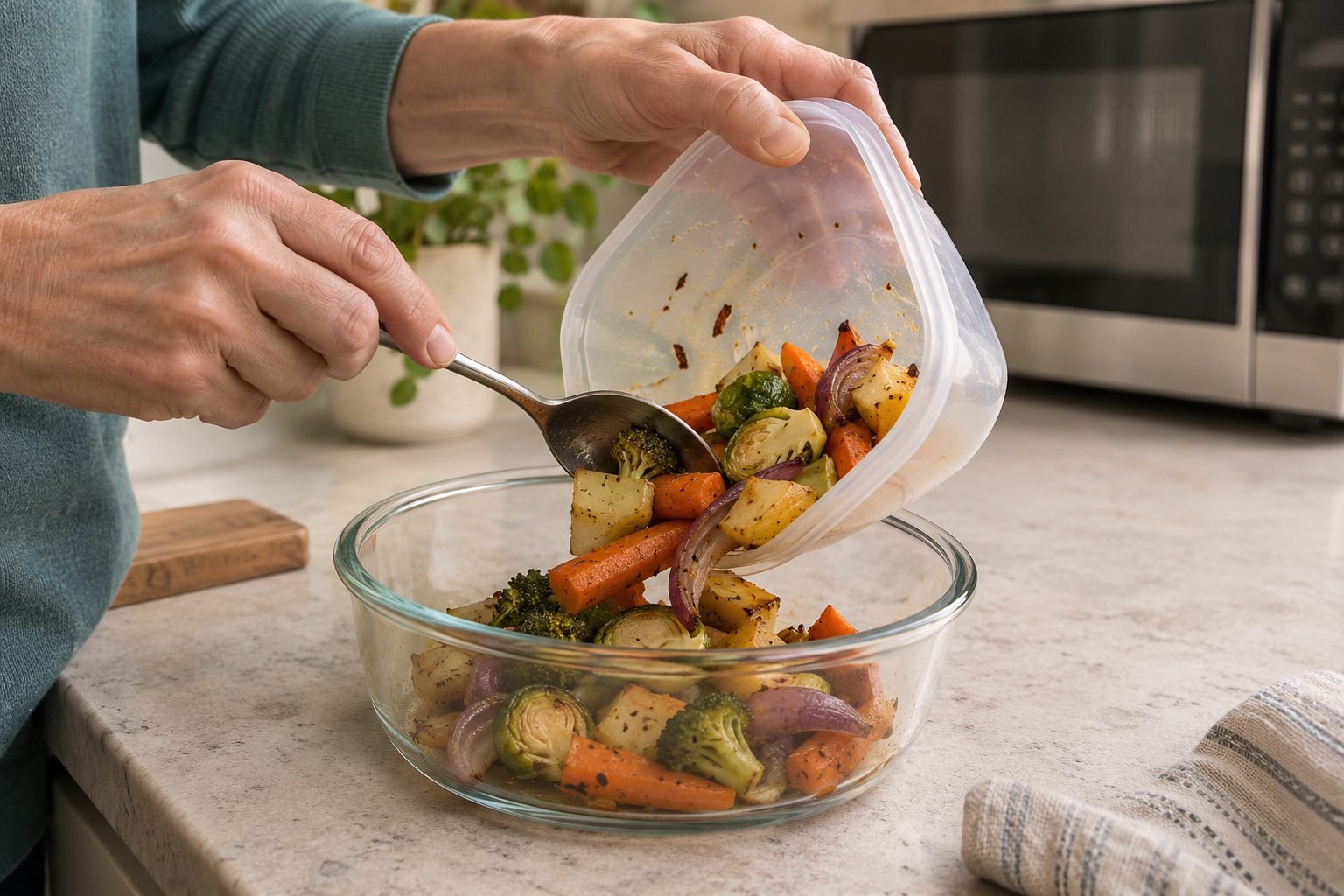
You’re about to reheat leftovers and pause at the plastic container. Is it worth reaching for a glass bowl? That’s one reasonable change if you already have a microwave-safe bowl. For drinking water, the useful first step is different: find out what your local water utility or health department recommends.
In this article
Endocrine disruptors can interfere with hormone signals. What matters for your next step is the specific chemical and how you might come into contact with it. You can start with one choice that fits your home and budget.
How endocrine disruptors affect hormone signals
The National Institute of Environmental Health Sciences (NIEHS) describes endocrine disruptors as natural or human-made chemicals that can interfere with hormones. Some can imitate a hormone’s signal, block it, or change how the body makes or breaks down hormones.
Think of a hormone as a message and a hormone receptor as a receiver. A chemical that imitates the message may turn the signal on at the wrong time. Others act farther upstream and change how much of the message is sent. The analogy explains how interference can happen; it can’t tell you whether a particular exposure will affect your health.
Where you might encounter these chemicals
These examples from NIEHS describe possible sources. Products within each category vary.
Scroll sideways to see all columns.
| Chemical or group | Examples of possible sources |
|---|---|
| BPA (bisphenol A) | Some hard plastics and food can linings |
| Phthalates | Some flexible plastics and personal care products |
| PFAS | Some stain-resistant products and drinking water in affected areas |
| Dioxins | Byproducts of some industrial processes and burning |
Depending on the chemical, exposure can happen through food, water, air, or skin contact. Hazard describes what a substance can do under certain conditions. Exposure is how much reaches you, by which route, and how often. The chance of harm also depends on factors such as when exposure occurs. A product category alone doesn’t tell you that chance.
What a soup study actually measured
In a randomized crossover study, 75 adult volunteers completed two five-day periods: fresh soup during one period and canned soup during the other. The same people tried both, and the order was randomized. Urinary BPA was higher after the canned soup period.
That result shows that the soup tested could change a short-term marker of BPA exposure. The researchers tested one canned soup brand and measured BPA in urine. They didn’t measure changes in participants’ hormones or their long-term health. It’s useful evidence about one route of exposure, with a much narrower answer than “Does canned food cause hormone symptoms?”
Three choices you can make without replacing everything
- Use the dish you already have. For leftovers, move the food to microwave-safe glass or ceramic before reheating. The Endocrine Society’s household guidance suggests keeping plastic away from high heat. You can start with the food you reheat most often.
- Check your water before buying a filter. If you’re concerned about PFAS, ask your water utility or local health department what has been measured and what they recommend. If filtration is recommended, the EPA’s filter guide explains how to look for a certification specifically for PFAS reduction. Follow replacement instructions; certification doesn’t guarantee the filter meets every drinking water limit. Follow local advice about alternative water sources when an advisory applies.
- Compare the label when it’s time to restock. If you prefer a cleaner without added fragrance, the EPA’s Fragrance-Free Safer Choice label identifies qualifying products without fragrance ingredients. That tells you about the ingredients covered by the label. It doesn’t tell you whether a product will change your hormone levels.
When to ask for help
If you have a documented exposure at home or at work, bring the water notice, product name, or workplace safety data sheet when you speak with your clinician. Include when and how often you may have been exposed. An occupational health service can help with questions about workplace controls. If you’re pregnant or planning a pregnancy, mention that when asking which steps are most relevant.
Bring up persistent symptoms even if you don’t know what caused them. For example, ATSDR explains that a PFAS blood test measures certain PFAS in blood. It can’t determine whether PFAS caused a symptom or predict whether you’ll become ill.
Frequently asked questions
Are endocrine disruptors only found in plastic?
No. They can occur in other materials and in the environment. For example, in an area with PFAS contamination, local drinking water may be a source worth checking.
What does BPA-free mean?
It tells you about BPA. It doesn’t tell you which materials replaced it or how those materials behave when heated. NIEHS notes that some BPA replacements are still being evaluated.
Can a detox remove endocrine disruptors?
A detox label doesn’t show that a product removes the chemical you’re concerned about. If you know the likely source, start there. For example, for PFAS in drinking water, follow local water guidance rather than relying on a cleanse.